What it is
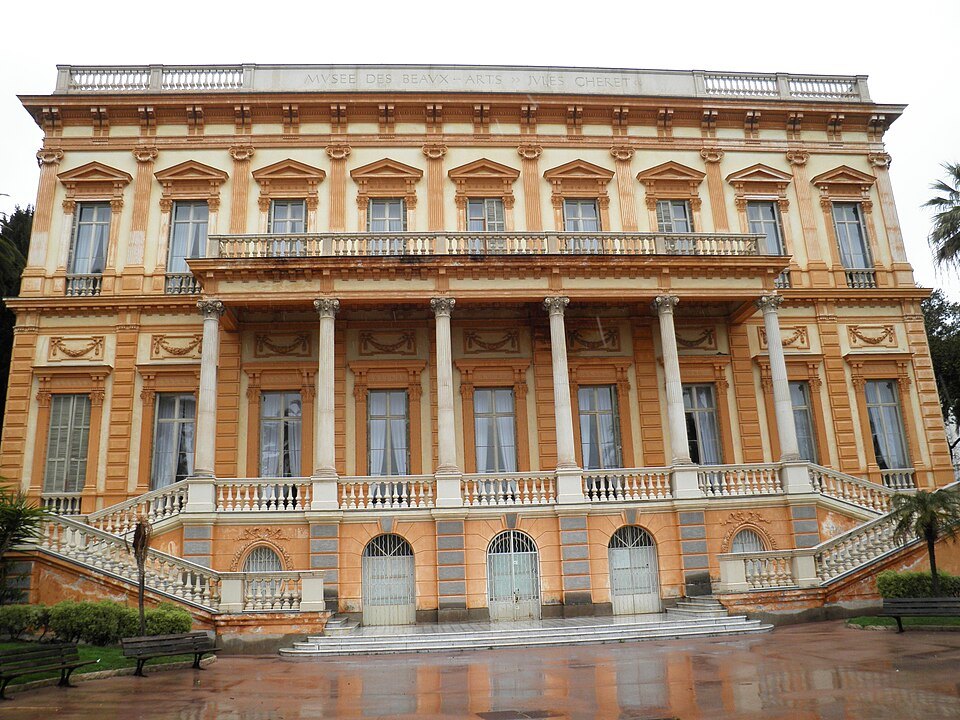
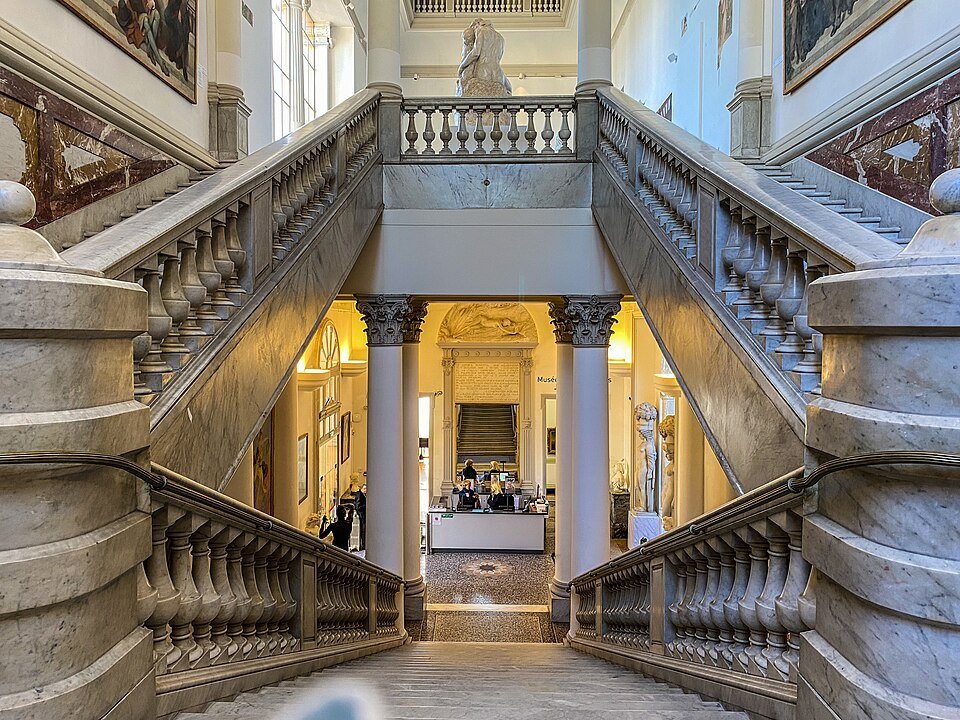
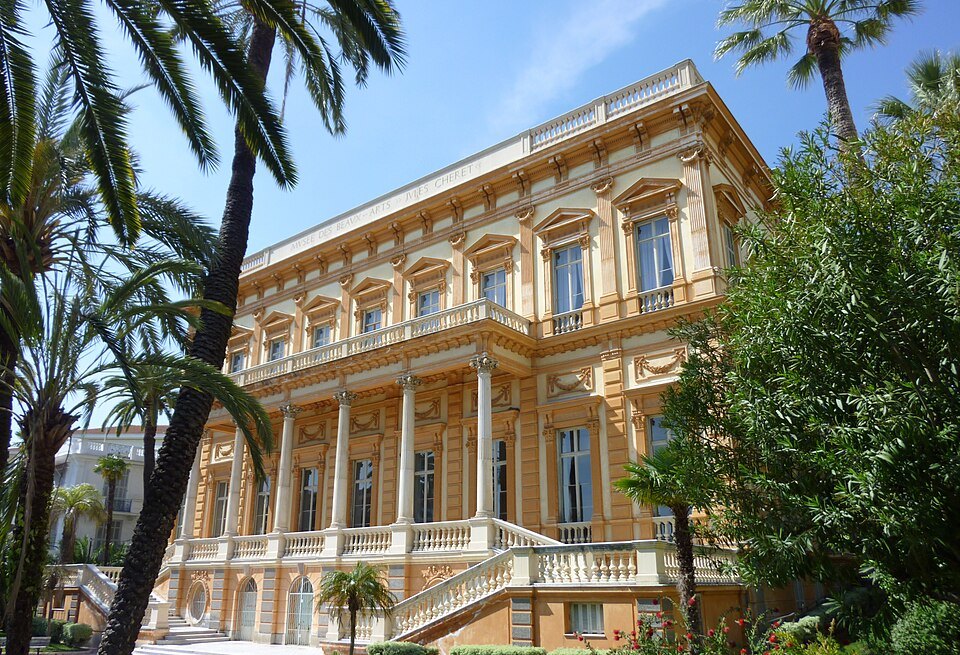
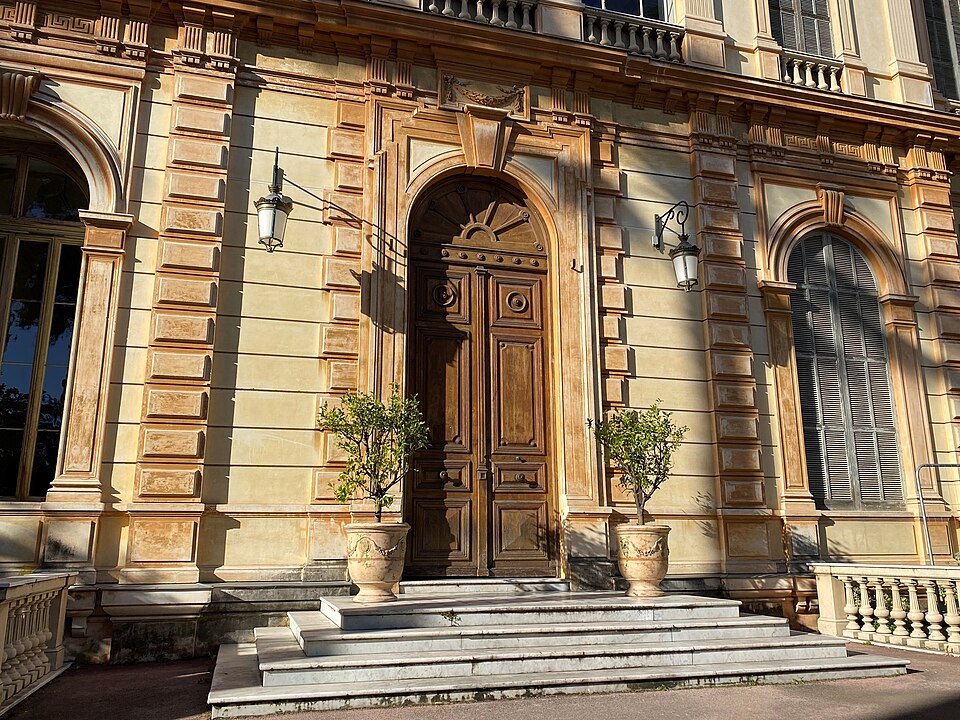
The museum occupies a grand nineteenth-century villa in the western districts, built as a winter residence in the years when this coast filled up with them. The staircase and the reception rooms are as much of the visit as the collection.
It carries the name of Jules Chéret, the poster artist who spent his last years in Nice.
What is in it
The holdings run from the seventeenth to the early twentieth century, with real strength in the period when Nice itself was being painted.
It is well away from the seafront crowds, and on a hot afternoon that is a considerable part of its appeal.
A princess's villa, finished by an entomologist
The villa was begun in 1878 by Princess Elizaveta Vasilievna Kochubey, who had settled in Nice with her husband, Prince Lev Kochubey, a privy councilor to Tsar Alexander II. She bought the land and set out to build a house inspired by the Italian Renaissance, on the Genoese and Michelangelesque models then in fashion; it may have been modeled on the Razumovsky palace at Baturyn in Ukraine rather than on the Kochubey palace in Saint Petersburg. Construction dragged; by 1881 it was still unfinished, and the princess, perhaps tired of waiting, decided to sell.
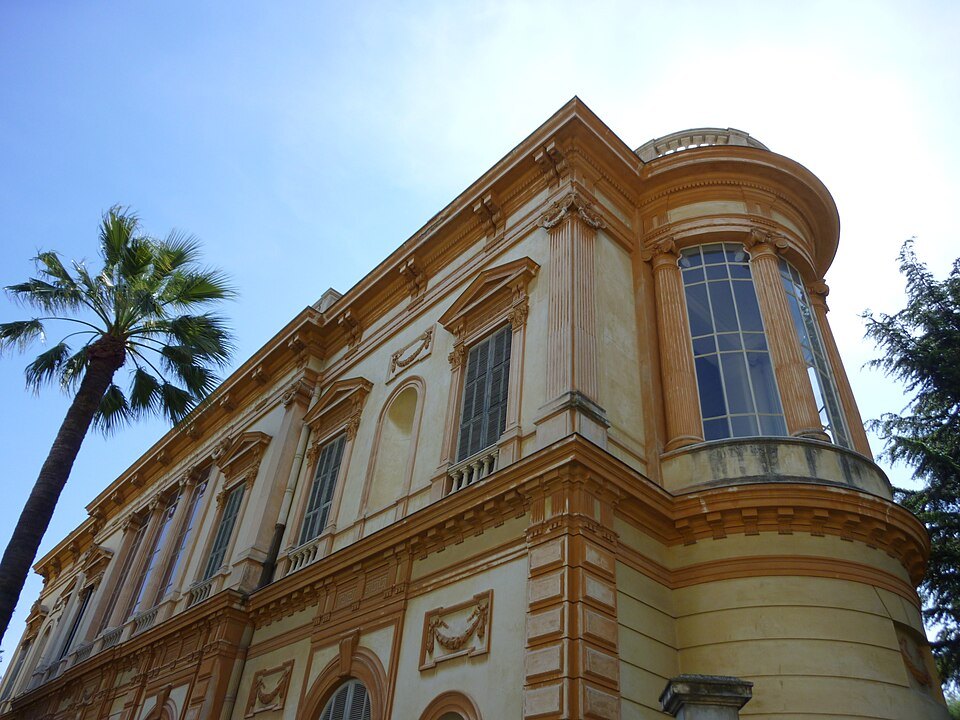
On April 18, 1883, the half-built villa was bought by James Livingston Thompson, a wealthy entomologist of American origin, and the Nice architect Constantin Scala completed it. The Thompsons spared no expense furnishing it to their taste and gave it their name. Thompson died in the villa on December 9, 1897. It was sold in 1920, part of the grounds were divided into building lots, and in 1925 the city bought it for its fine arts museum, which opened in 1928 as the Palais des Arts, Musée Jules Chéret. Its mannerist Genoese facades and roofs were protected as a historic monument in 1976 and fully classified in 2023.
A collection that began with Napoleon III
The museum started as a deposit of works from the French state, which Napoleon III wanted Nice to have after the annexation of 1860. Nobody had planned a building for it, so the paintings shared space with the archives and the library, moved to a rented building in 1892 and to another in 1901, and only came here in the 1920s. Most of the collection was built from gifts by private collectors, among them the painter Félix Ziem, the mother of Marie Bashkirtseff, Baron Joseph Vitta, Madame Dufy, Maurice Fenaille, Fanny Trachel and the Mossa family, and more recently the bequests of Aline Avigdor and Ethel Messiah and gifts from the friends of the sculptor Michel de Tarnowsky. Alexis Mossa and his son Gustav-Adolf Mossa, both painters, were curators of the museum for many years. Since 2023 the Musée d'Orsay in Paris has been a scientific partner.
What you will see
You enter through the patio, once a winter garden, under a tall Belle Époque glass roof. The ground floor runs from early regional painters through the eighteenth century, with a large room given to the Van Loo dynasty of painters and works by Louis Bréa, Bronzino, including a recently rediscovered Christ on the Cross, Jan Brueghel the Elder, Fragonard and Hubert Robert.
A monumental staircase leads to the first floor, devoted mainly to nineteenth-century academic painting and sculpture, with the Impressionists, Nabis and Fauves also represented: Cabanel, Boudin, Monet's Cliffs at Fécamp of 1897, Sisley, Vuillard, Bonnard, Raoul Dufy, Kees van Dongen and Marie Laurencin, with sculpture by Carpeaux, Rude and Rodin. There are ceramics by Picasso, a self-portrait by Louise Catherine Breslau, and many paintings by her rival at the Académie Julian, Marie Bashkirtseff.
Who Jules Chéret was
The museum's namesake, Jules Chéret, born in Paris in 1836, is often called the father of the modern poster. After training in lithography in London from 1859 to 1866, he filled the walls of Paris with posters for the Folies Bergère, the Olympia and the Moulin Rouge, and his joyful, elegant women, nicknamed Chérettes, became part of the look of the city; Edmond de Goncourt called him the first painter of the Paris wall. He received the Legion of Honor in 1890 for creating an art form that served commerce and industry. In old age he retired to Nice for its climate, and he died in 1932, aged ninety-six. The museum keeps an important collection of his work.
His style owed a debt to the playful scenes of Rococo painters such as Watteau and Fragonard, whose work you can see downstairs. In 1895 he launched Les Maîtres de l'Affiche, a publication of small reproductions of the best posters by ninety-seven artists, and the same year he was invited to paint murals for the Hôtel de Ville in Paris, a series called The Joys of Life. His success opened the way for a new generation of poster designers, Henri de Toulouse-Lautrec among them.
Sources
- Musée des Beaux-Arts Jules Chéret — Wikipédia (French)
- Musée des Beaux-Arts de Nice — Wikipedia
- Jules Chéret — Wikipedia