What it is
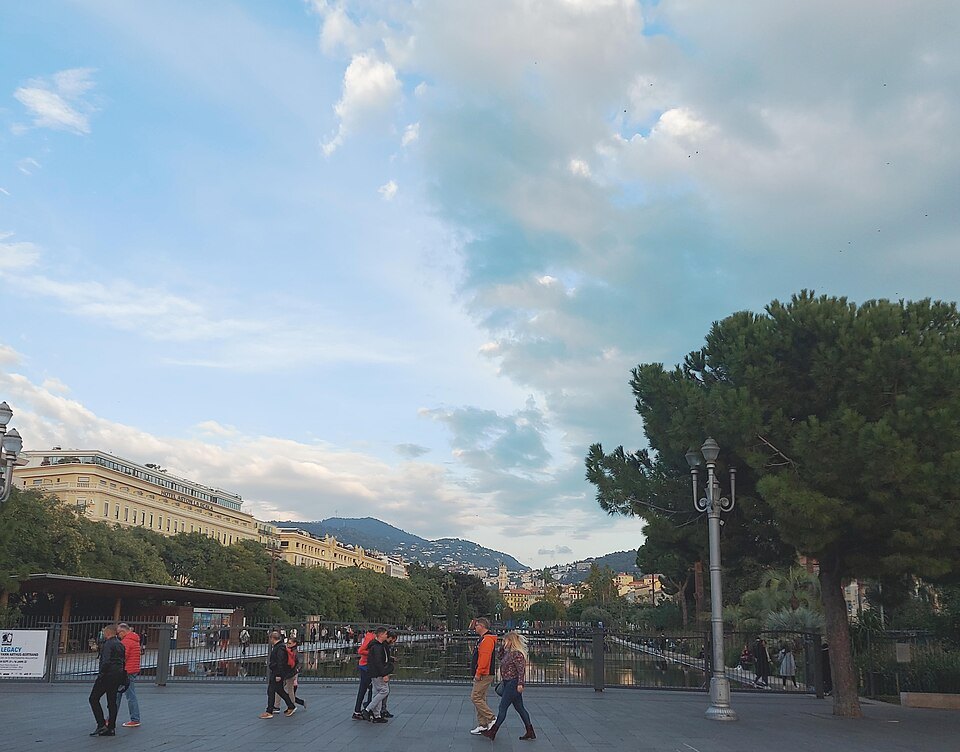
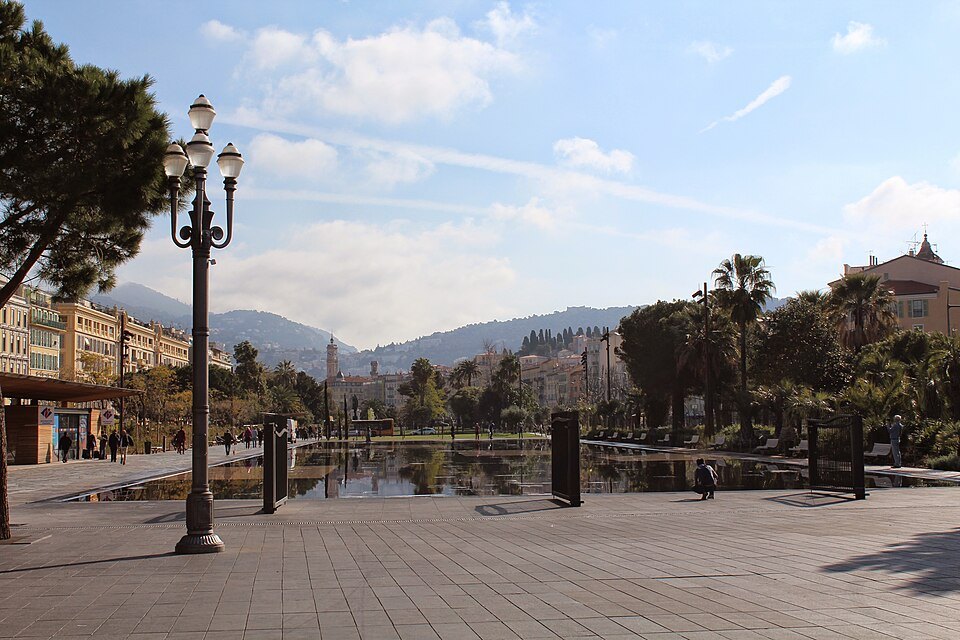
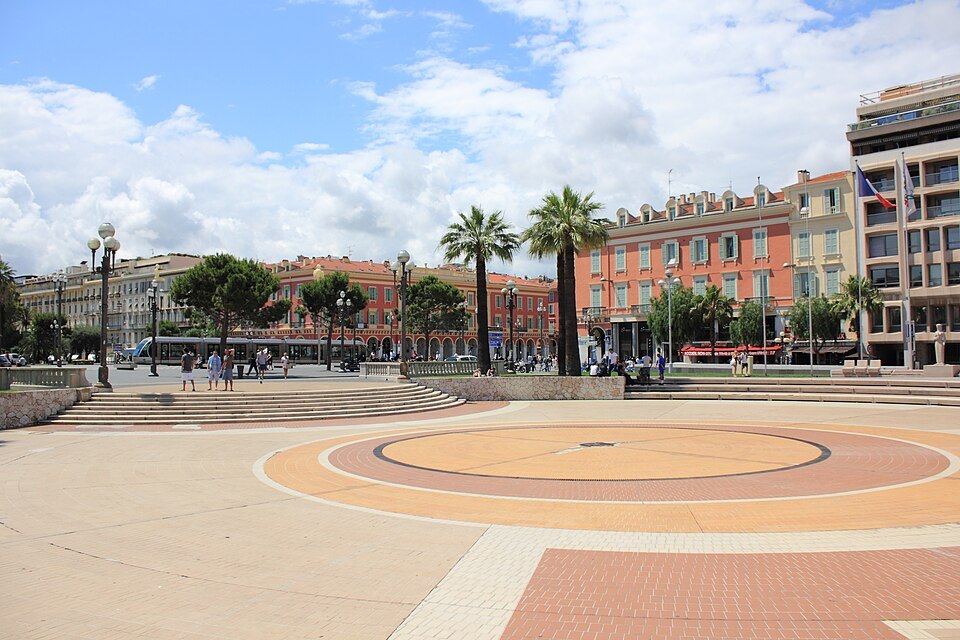
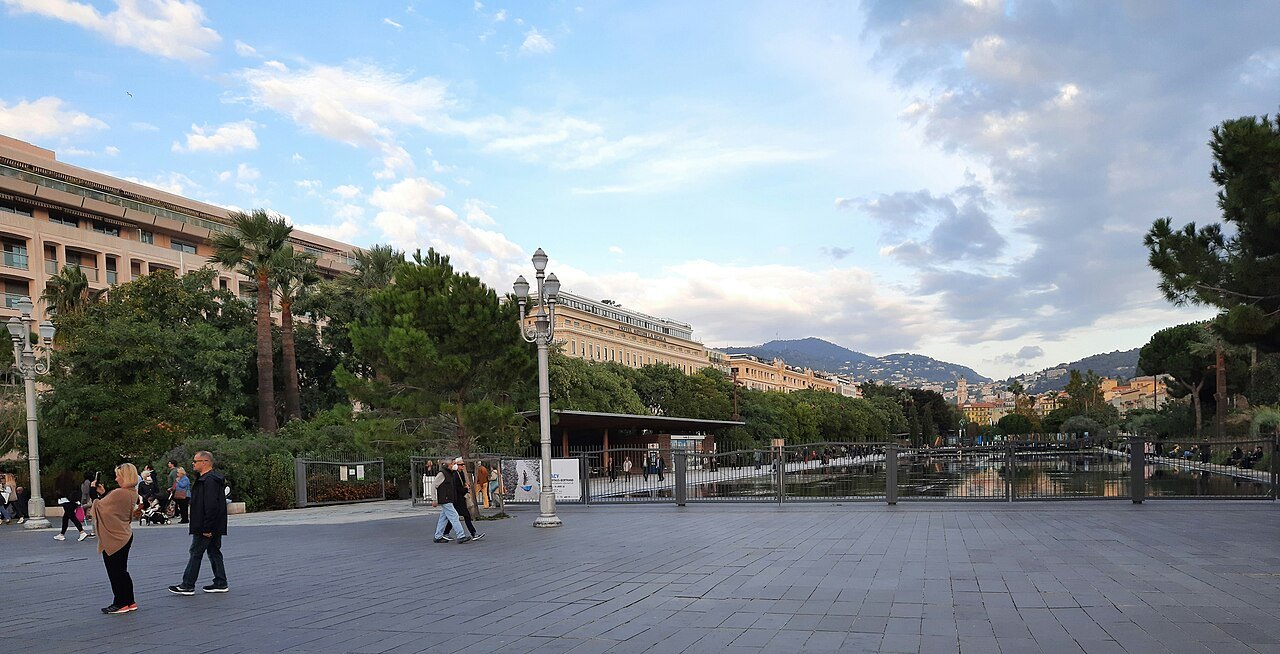
A long garden running from Place Masséna inland — lawns, water features, and a great many plants, threading between the old town and the nineteenth-century city.
It is built on top of the Paillon, the river that used to divide Nice in two. The river was progressively covered over from the nineteenth century onward, and the space above it carried a bus station and a car park before the park opened in 2013.
Using it
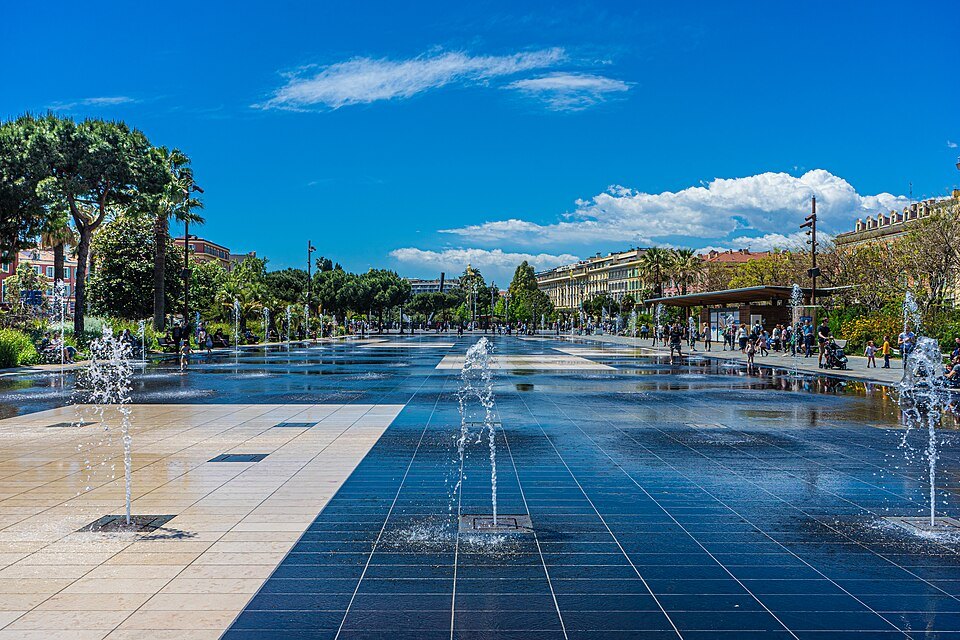
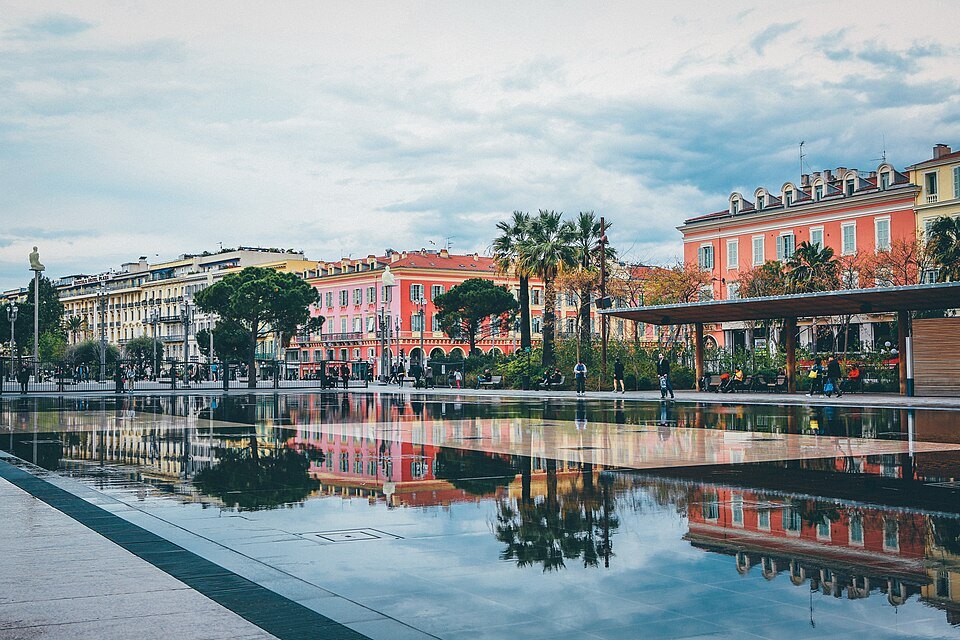
It is the shaded route across the centre, which matters more than it sounds in summer. The mirror-of-water at the Masséna end is shallow and children treat it as a playground.
The river under your feet
The Paillon is a short coastal river, 35.8 kilometers long, that rises at 1,300 meters on the slopes of Mont Auri near the Col de Braus, about thirty kilometers north of Nice. Four branches join into one steep channel in a narrow valley, which is why its floods were sudden and destructive; mounted lookouts used to gallop along the banks shouting Paioun ven!, the Paillon is coming. Major floods are recorded from 1241 to 1994.
The rest of the time it was almost dry, and for the people of Nice it was a working river. Until the nineteenth century its water was diverted through tunnels in the town walls to turn the wheels of flour, tanning and paper mills, and washerwomen used its thin stream as a public laundry, so that visitors described a river that seemed to exist only to wash and dry linen.
How the river disappeared
The banks were walled in stages. From 1832 to 1836 the Paillon was embanked on both sides from the Pont-Neuf to the sea, and the quays were finished in 1863. Then the covering began: in 1868 the first section became the square now called Square Général-Leclerc, a municipal casino followed in 1884, from 1891 the covering moved on toward the sea, joining the two halves of Place Masséna, and in 1893 the Jardin Albert-Ier was laid out. In 1921 the old bridge, the Pont-Vieux, disappeared under the covering, and the work downstream of the railway line was finished in 1972.
For decades the new ground filled with buildings: an exhibition hall in 1954, a bus station and parking garage in 1973, a theater, the Acropolis convention center in the 1980s, and in 1990 the museum of modern and contemporary art. With the Tête Carrée sculpture-building in 2002, the covered river was almost entirely built over.
The green corridor
Work on the promenade began in 2010 with the demolition of the bus station and its hanging gardens. Designed by the landscape architect Michel Péna, the park opened on October 26, 2013, running 1.2 kilometers from the Promenade des Anglais to the national theater, past the open-air Théâtre de Verdure and the Jardin Albert-Ier, following the line of the buried river. It was an immediate success with local families and visitors.
It now holds about 1,600 trees, 6,000 shrubs and 50,000 perennials. The water mirror covers 3,000 square meters with 128 jets, and next to it is a 1,400-square-meter mist plateau; the stretch just east of the water mirror is named for the former mayor Jacques Médecin. A bronze copy of Michelangelo's David, the monument to Masséna by Carrier-Belleuse, and Cyril de La Patellière's bronze Nikaïa, unveiled in 2019, stand along the way. Note that the park's rules do not allow sitting on the lawns.
An extension presented by the mayor in 2020, planned on the site of the national theater and the Acropolis convention center, added another kilometer and almost eight hectares; it opened on October 18, 2025, bringing the whole promenade to twenty hectares.
The museum on stilts
At the northern end, near Place Garibaldi, the Museum of Modern and Contemporary Art, the MAMAC, opened on June 21, 1990. Designed by Yves Bayard and Henri Vidal, it straddles the covered river on four legs, faced in white Carrara marble. Its collection centers on the New Realists, with the Nice artists Arman, Yves Klein and Martial Raysse alongside Niki de Saint Phalle, who gave the museum 170 works in 2001, among them her Loch Ness Monster, and on American Pop Art, with Warhol, Lichtenstein and Oldenburg. Yves Klein has had a room of his own since the museum opened, and the collection also covers Arte Povera, the Supports/Surfaces group and the School of Nice around the artist Ben: some 1,331 works by 346 artists in 2014, shown across nine galleries on three levels, with a terrace linking the museum to the theater. The museum closed in January 2024 for a major renovation, complicated by its foundations over the river, and its reopening has been announced for 2029.
Sources
- Promenade du Paillon — Wikipédia (French)
- Paillon — Wikipédia (French)
- Musée d'Art moderne et d'Art contemporain de Nice — Wikipédia (French)