What it is
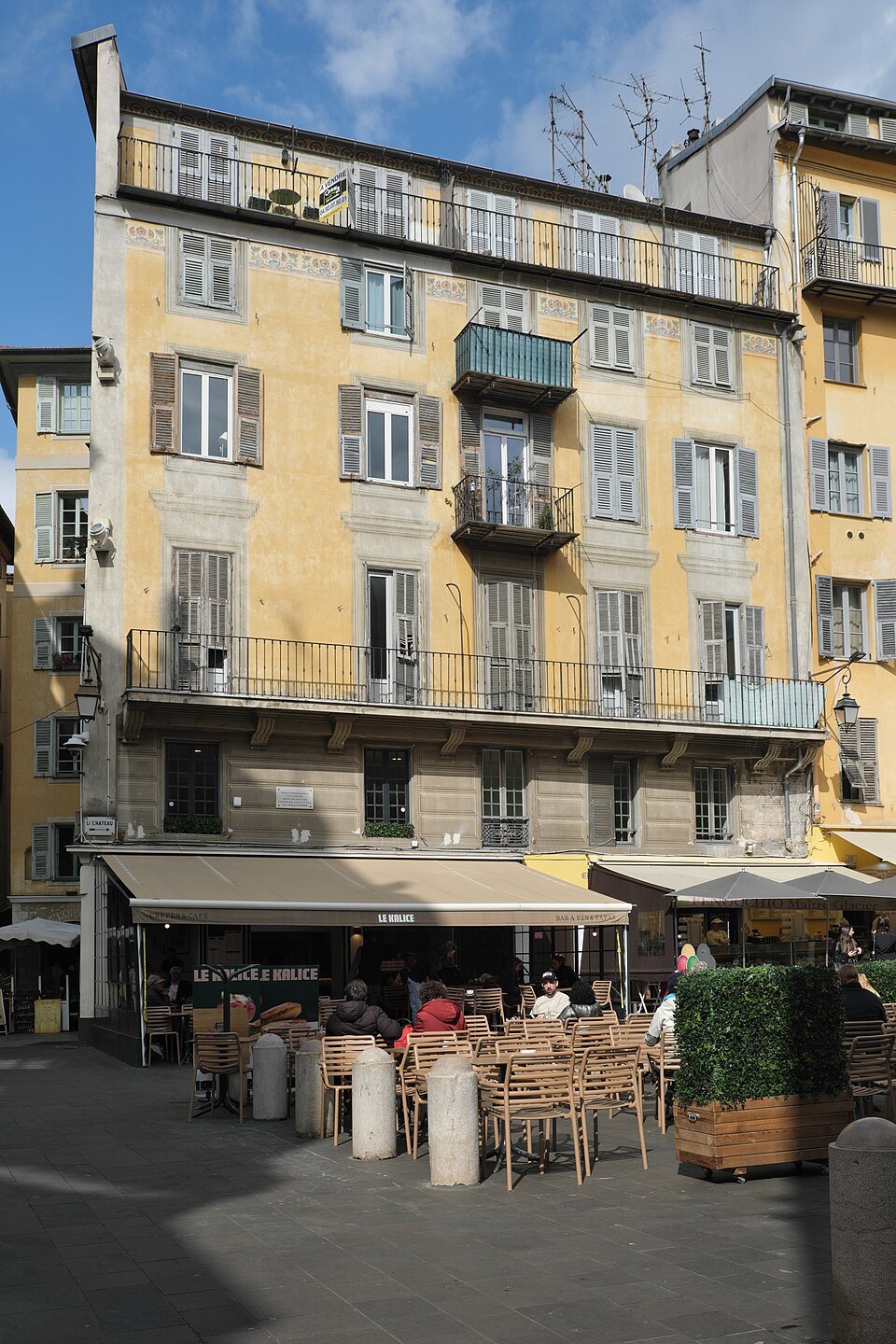
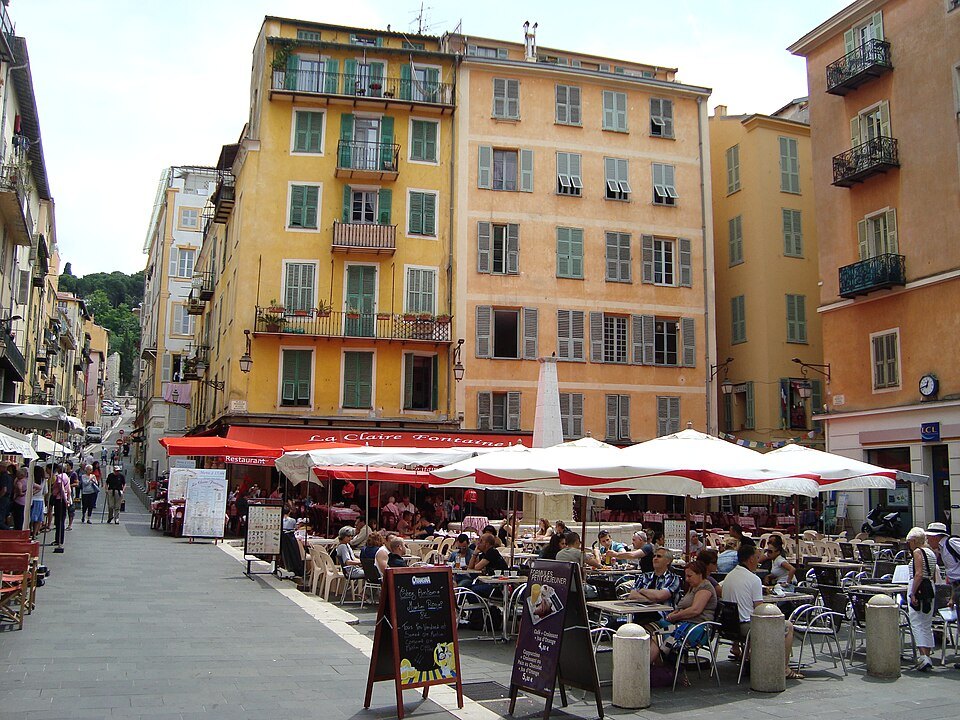
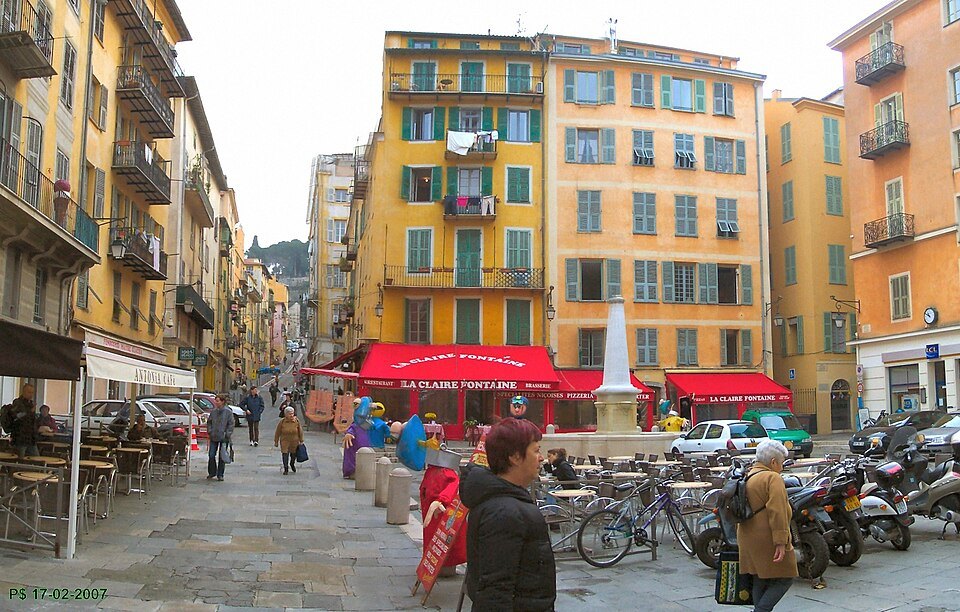
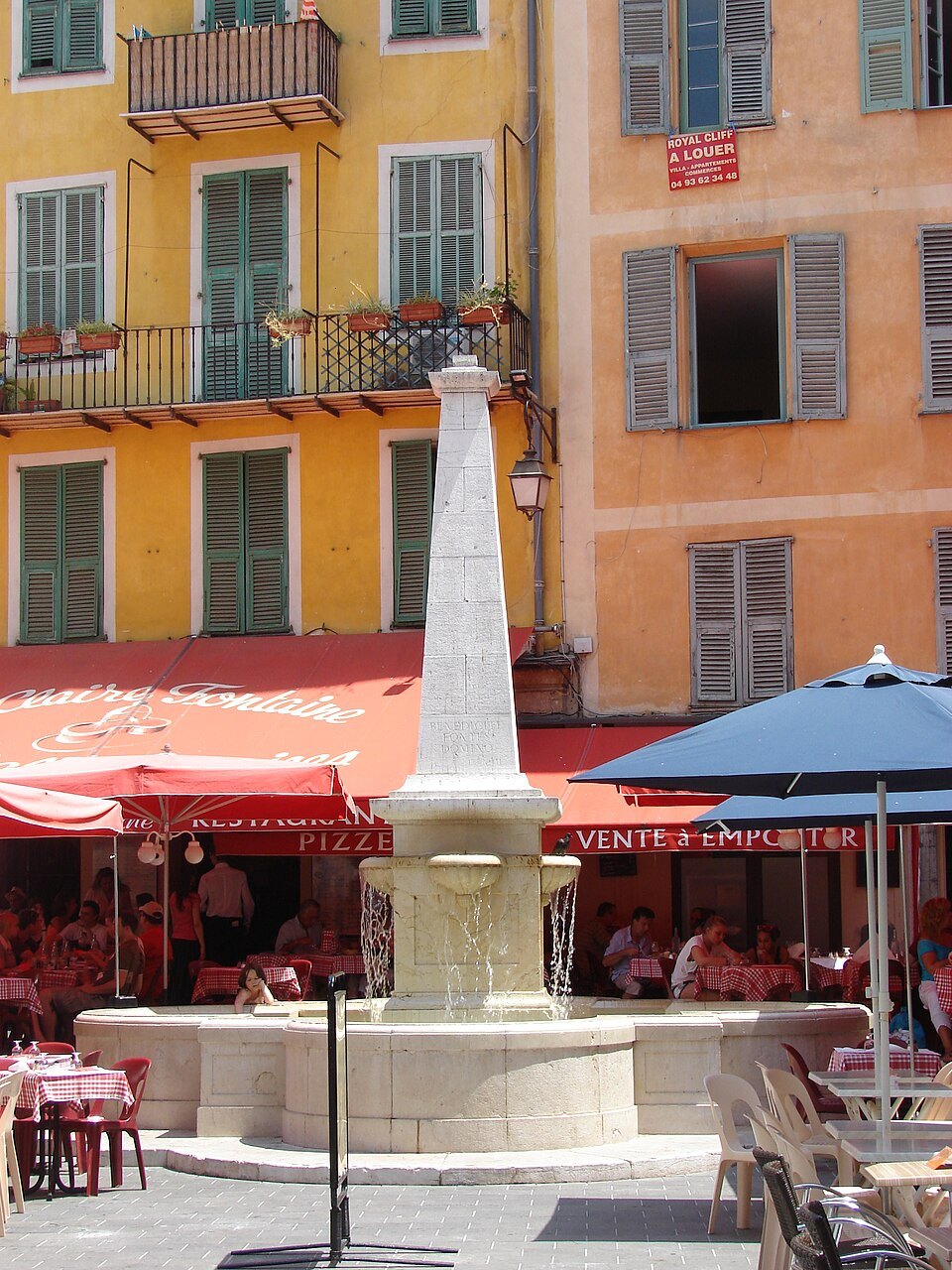
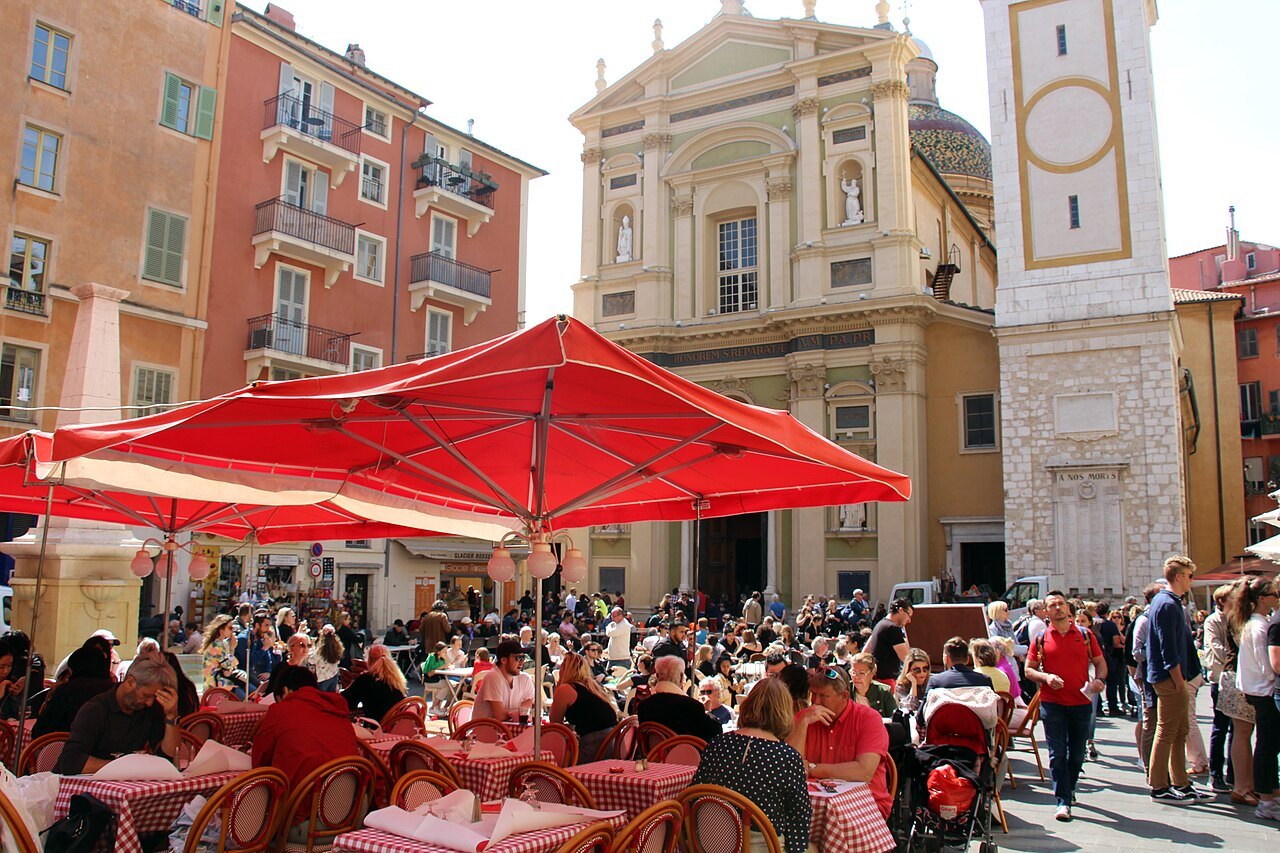
A small square in the middle of Vieux Nice, and after the shaded lanes the sudden light is the whole effect. The cathedral takes up one side; the others are tall houses in ochre and red with shutters and a fountain at the centre.
What it is for
Sitting down. The square is ringed with terraces and it is the traditional place in Nice to eat an ice cream, which is why it is busy from late morning until late at night.
Come early if you want the square rather than the crowd — the light on the facades is better then anyway.
A square made by taking a building away
Place Rossetti did not always exist in this form. A block of houses once stood in front of Sainte-Réparate, so close that the cathedral was as hard to see as the Palais Lascaris still is today in its narrow lane. The Rossetti family, who gave Nice and its county many prominent citizens, provided the solution: Charles Rossetti de Châteauneuf left the city the land in front of the cathedral, and his bequest allowed the building facing it to be demolished in 1825, giving the church a true forecourt and widening the square. In return the city gave the family's name to the new square and to the street that climbs from it toward the castle.
The clearing was part of a larger effort. After 1815 the planners of the Consiglio d'Ornato set out to open up the cramped streets of the old town, and the square in front of the cathedral was enlarged in stages; the last houses came down in 1871. The facade you look at across the square was added to the cathedral between 1825 and 1830, at the same moment the view of it was being opened up.
What you are looking at
The cathedral, at number 3 on the square, is the seat of the Diocese of Nice. Its story on this spot goes back to 1078, when Raimbald Rostagni brought relics of Saint Reparata from Rome and founded an oratory at the foot of the castle, in what was then the drapers' street. Its main building went up between 1650 and 1699, on the plan of the church of Santa Susanna in Rome: a Latin cross with a dome over the crossing, covered in glazed tiles in the Genoese manner. From the square the dome is partly hidden by the bell tower, built between 1731 and 1757, which is why the best view of the tiles is from the castle hill above.
Inside are ten chapels, each once kept up by a family or a trade guild, and above the high altar a painting of the Glory of Saint Reparata, the young martyr whose relics have been kept here since 1690. The cathedral has been a classified historic monument since 1906 and a minor basilica since 1949; see the cathedral's own page for its full story.
The streets that meet here
Place Rossetti is the heart of the old town for visitors, with restaurant terraces on three sides, and several of the old town's main lanes meet here. Rue Rossetti leaves the square to the east and climbs onto the lower slopes of the castle hill; a final flight of steps brings you to Rue du Château, once the only way up to the citadel.
Rue du Pont-Vieux runs from the Paillon side to the square. In the sixteenth century it was simply the bridge street, and before that the street of the carpenters; it became the Old Bridge street when the Pont-Neuf was built in 1824, and until then it was, apart from a few fords, the only road for carts to the far bank of the river and on toward France. The west side once had Gothic arcades on short columns, and traces of them survive at the northern end. The Saint-Antoine gate at the top of the street was taken down in the nineteenth century and rebuilt on the castle hill as a fake ruin below the waterfall.
Through the year
In summer the square fills with the awnings of the shops and restaurants around it. It is also used for local events, among them a living nativity scene at Christmas. The square is also where the city gathers at its hardest moments: on July 15, 2016, the day after the attack on the Promenade des Anglais, a mass for the victims was celebrated in the cathedral by four bishops and some twenty priests. And on May 24, 2021, after the bell system was restored, the cathedral's great bell swung and rang out over the square for the first time in a hundred years.
It is a good place to understand how the old town changed. Until the 1960s the Niçois language was widely spoken in these streets; since the 1970s many of the traditional neighborhood shops have given way to businesses for visitors.
Sources
- Place Rossetti — Wikipédia (French)
- Cathédrale Sainte-Réparate de Nice — Wikipédia (French)
- Vieux-Nice — Wikipédia (French)