What it is
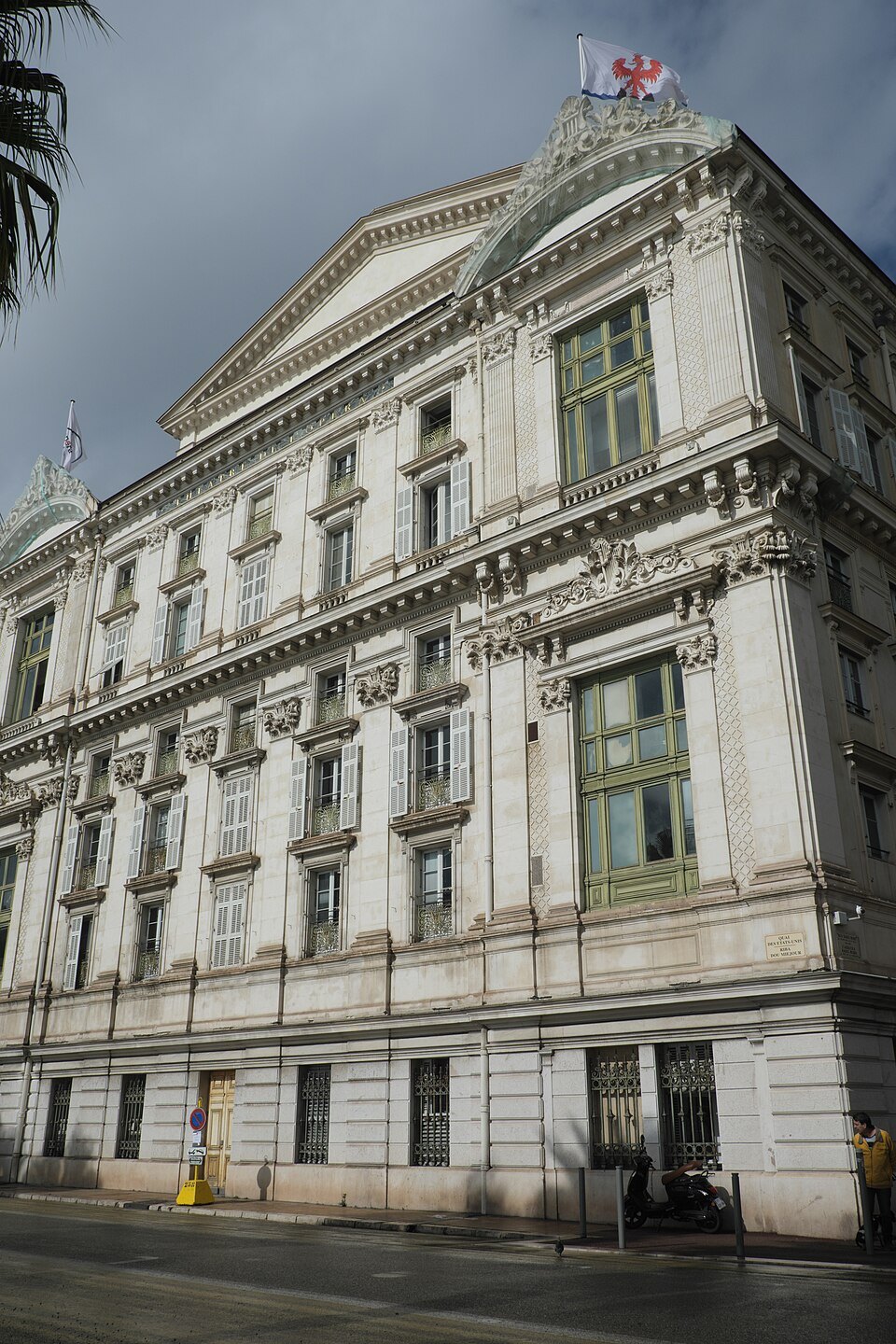
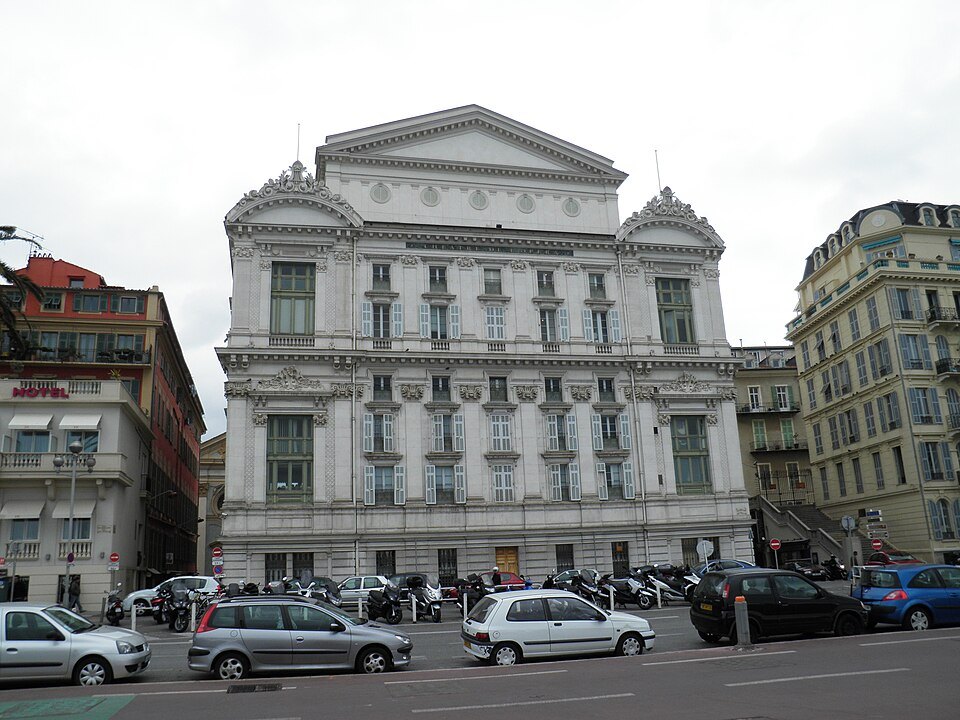
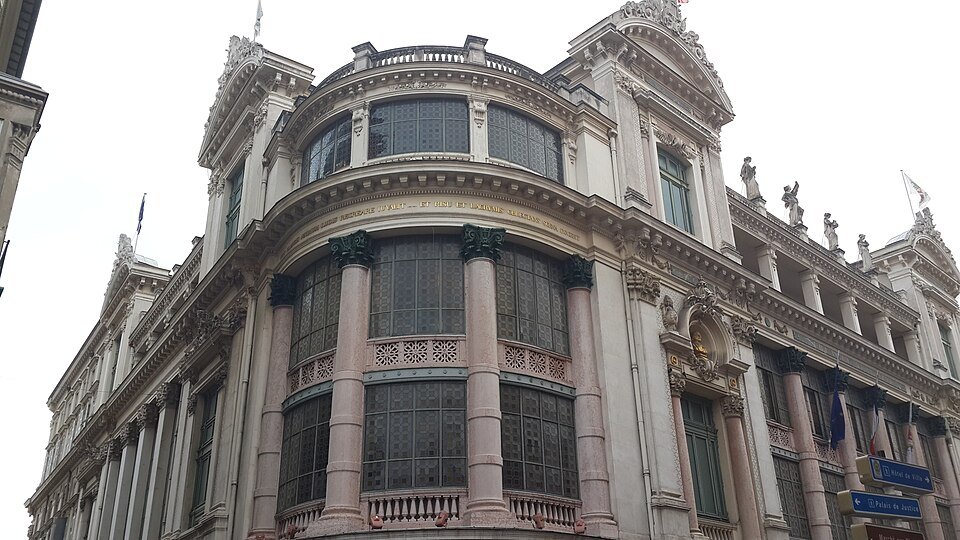
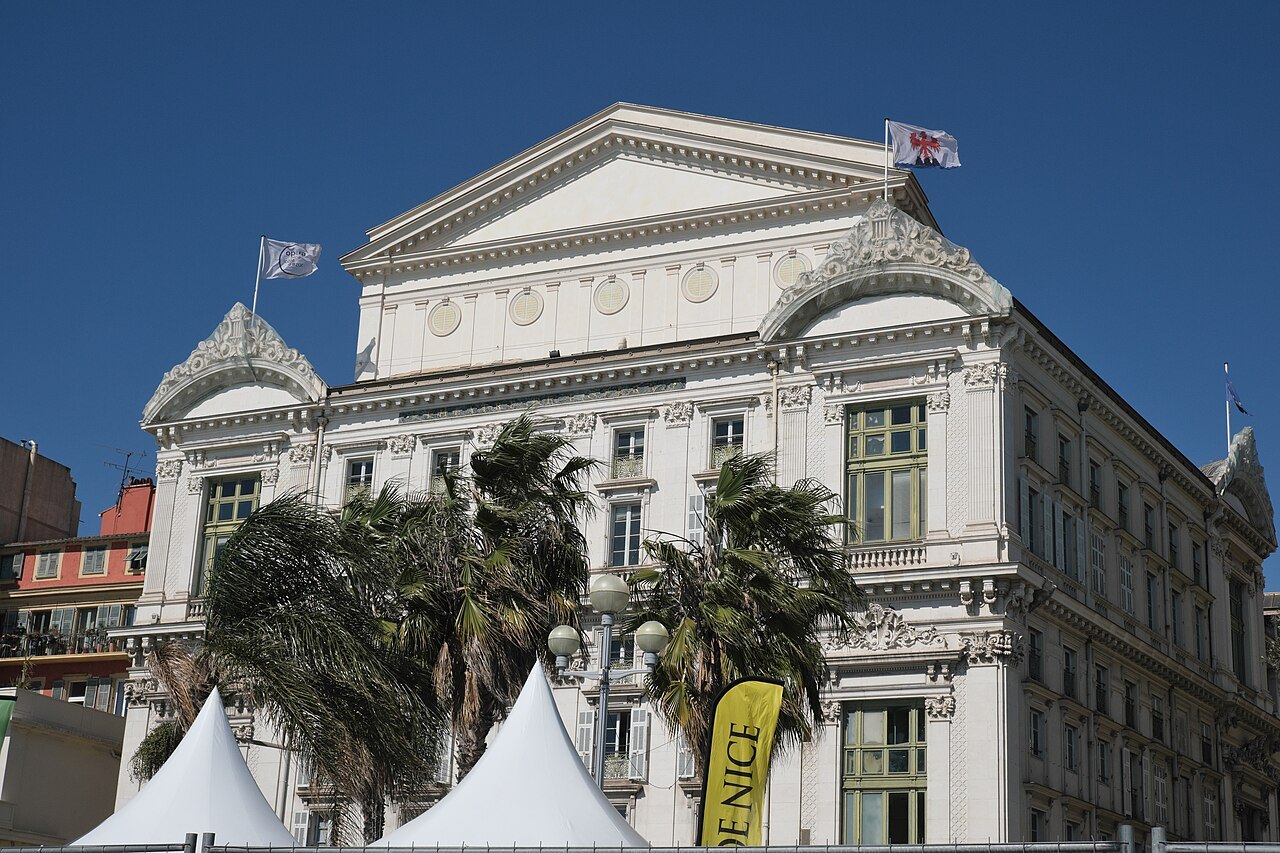
The Opéra stands one street back from the Quai des États-Unis, on the edge of the old town. The present building is the nineteenth-century replacement for a theatre that burned down, and the facade is confident Italianate — a seaside opera house that knows it is on a seafront.
Seeing it
The building is best appreciated from the outside unless you are going to a performance; the street is narrow enough that the facade arrives all at once.
What is on, and whether there are seats, is the opera house's own business — this site carries no schedules and no prices.
Three theaters on one site
There has been a theater on this spot, by the old Saint-Éloi gate, since the eighteenth century. The first was a small wooden playhouse founded by the Marquess Alli-Maccarani. A rival society known as the Forty bought it in 1789 and enlarged it for the growing crowd of winter visitors. When French troops occupied Nice in 1792 it was turned into a patriotic club, and later reopened as the Théâtre de la Montagne.
In 1826, encouraged by King Charles-Félix, the city bought it, pulled it down and built the Théâtre Royal, a neoclassical house modeled on the Teatro San Carlo in Naples, designed by Benoît Brunati. Its huge curtain, painted by Jean-Baptiste Biscarra, showed the triumph of Catherine Ségurane, Nice's local heroine. Inside, the floor of the house was a wide standing pit without seats, ringed by several tiers of boxes. A great ball was held there in 1856 in honor of King Victor Emmanuel II. Under the Second Empire it became the Théâtre Impérial: in 1860 Napoleon III attended an evening there with Johann Strauss conducting the orchestra, and in 1864 he came back with Tsar Alexander II.
The fire of 1881
On March 23, 1881, just as a performance of Lucia di Lammermoor was beginning, a gas leak started a fire that destroyed the theater. The French account puts the toll at two hundred victims, who are commemorated by a pyramid-shaped monument at the entrance to the castle cemetery. Among the dead were three siblings of the singer Marjory Kennedy-Fraser, a soprano, a contralto and a baritone.
The city decided at once to rebuild on the same site, larger than before. The new house was designed by François Aune, with the approval of Charles Garnier, architect of the Paris Opéra, and it opened on February 7, 1885, with Verdi's Aida. In 1902 it took the name Opéra de Nice.
Inside the hall
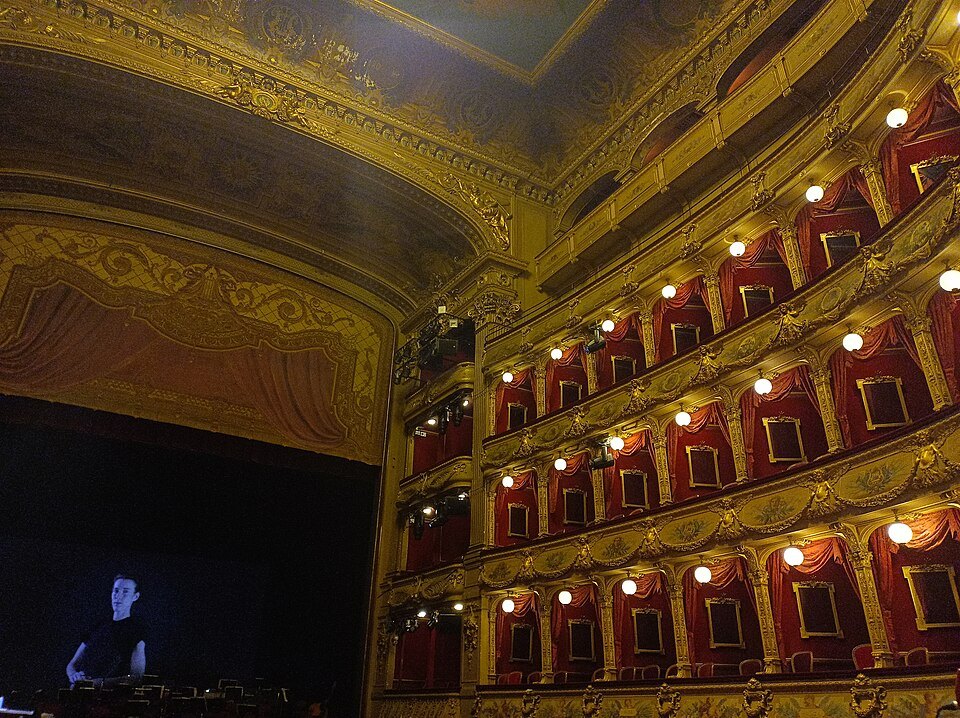
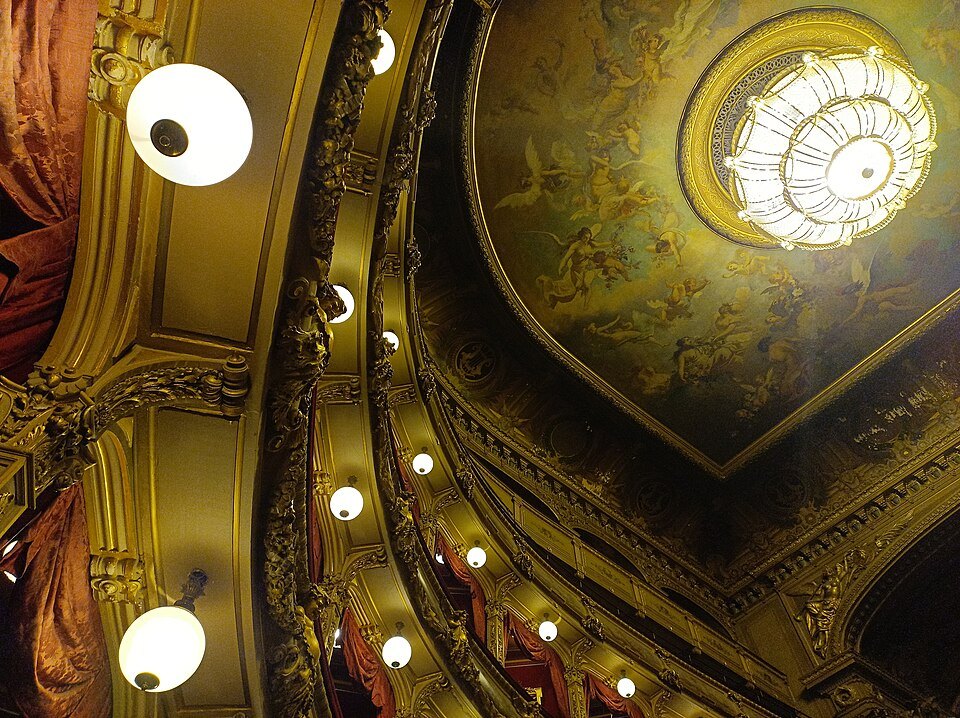
The outside is in the eclectic style of the period; the inside is a horseshoe-shaped auditorium, richly decorated and nineteen meters wide by twenty-three long, with 1,083 seats. The great ceiling fresco shows a mythological sky with Phaethon, son of Apollo, driving the chariot of the sun, and the four panels of the Nine Muses in the main foyer, like the ceiling, are by the painter Emmanuel Costa. The building has two main fronts, one facing the sea on the Quai des États-Unis, on ground once taken up by the ramparts and fishermen's huts, and the public entrance on the old-town side, on Rue Saint-François-de-Paule. It has been a listed historic monument since March 31, 1992.
A stage with a history
Nice gave France its first productions of several major operas, including Lohengrin in 1881, Eugene Onegin in 1895 and Das Rheingold in 1902, and two world premieres: the first two acts of Berlioz's Les Troyens, as La Prise de Troie, on January 28, 1891, and Massenet's Marie-Magdeleine on February 9, 1903. Later stars included Montserrat Caballé, Régine Crespin and José Carreras; Luciano Pavarotti sang La Bohème here in 1976, and Plácido Domingo Samson et Dalila in 1985.
The house has also given first performances of new work: Manuel de Falla's La vida breve, Hans Werner Henze's Elegy for Young Lovers, conducted by Jean Périsson in 1960, and Laurent Petitgirard's Elephant Man. It brought Glinka's A Life for the Tsar, Ponchielli's La Gioconda and Shostakovich's Katerina Ismailova to the French stage. For three decades, from 1950 to 1982, it was run by Ferdinand Aymé, and in November 2012 the tenor Jonas Kaufmann sang here; over the years its guests have also included the composer Darius Milhaud and the guitarist Andrés Segovia. In this century it has worked more closely with the Opéra de Monte-Carlo and with the region's orchestras.
The house is home to the opera chorus, the Ballet Nice Méditerranée, founded in 1947, and the Nice Philharmonic Orchestra. Its sets and costumes are made in its own production workshop, the Diacosmie. In June 2025 it premiered a choral work, Hymne à l'océan, as a prelude to the United Nations Ocean Conference held in Nice.
Sources