What it is
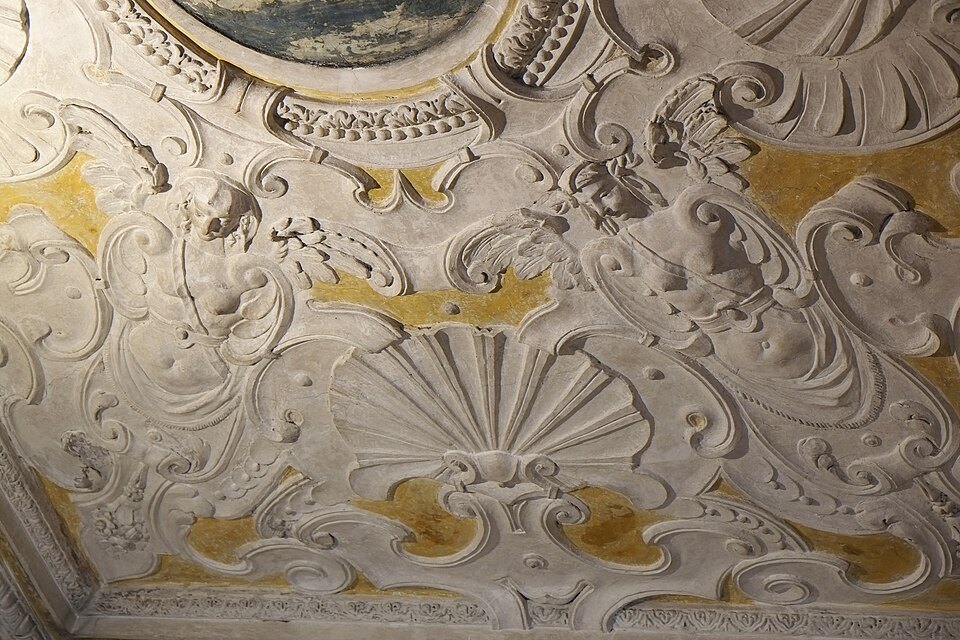
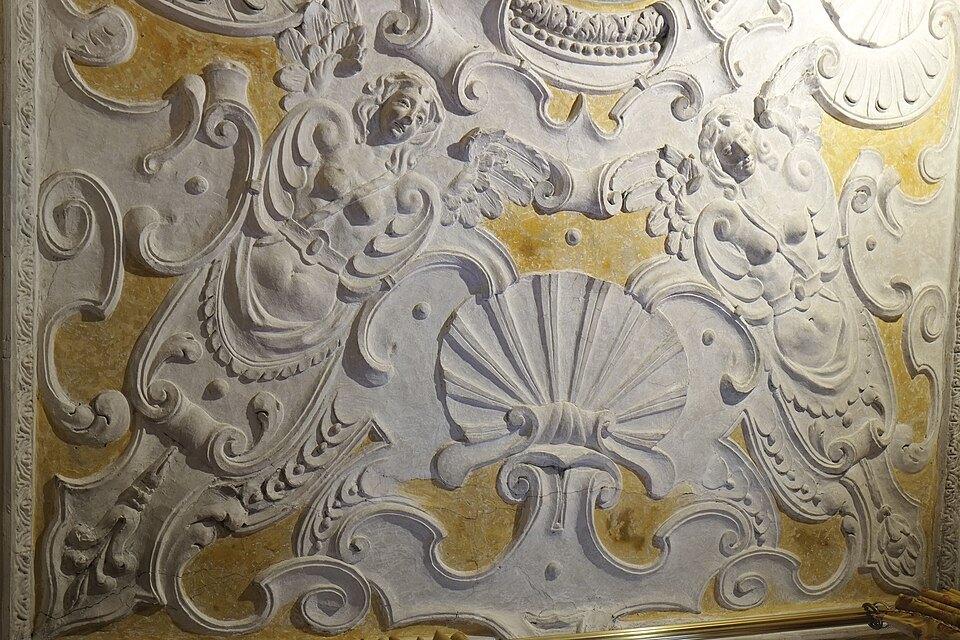
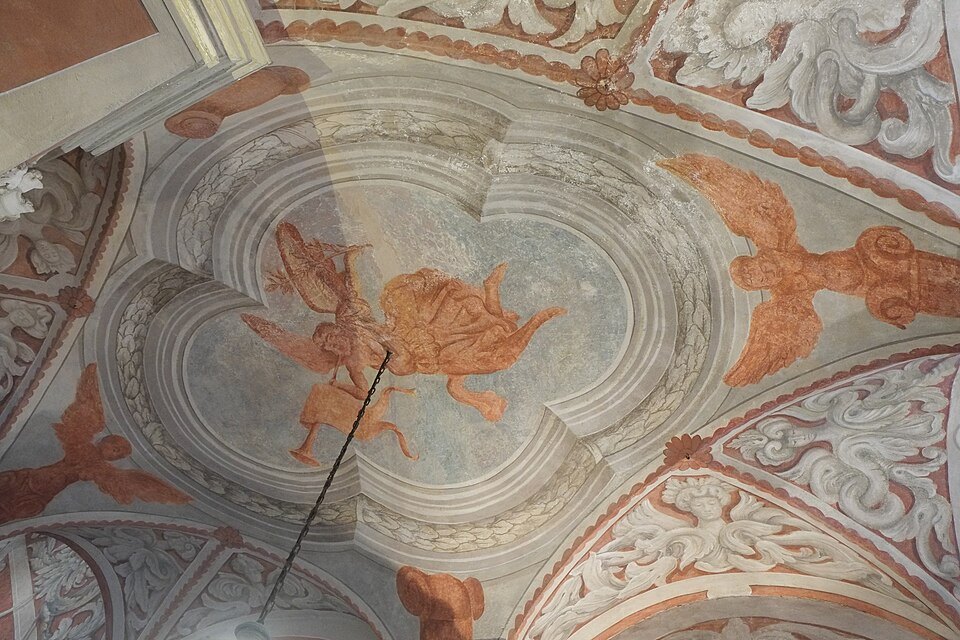
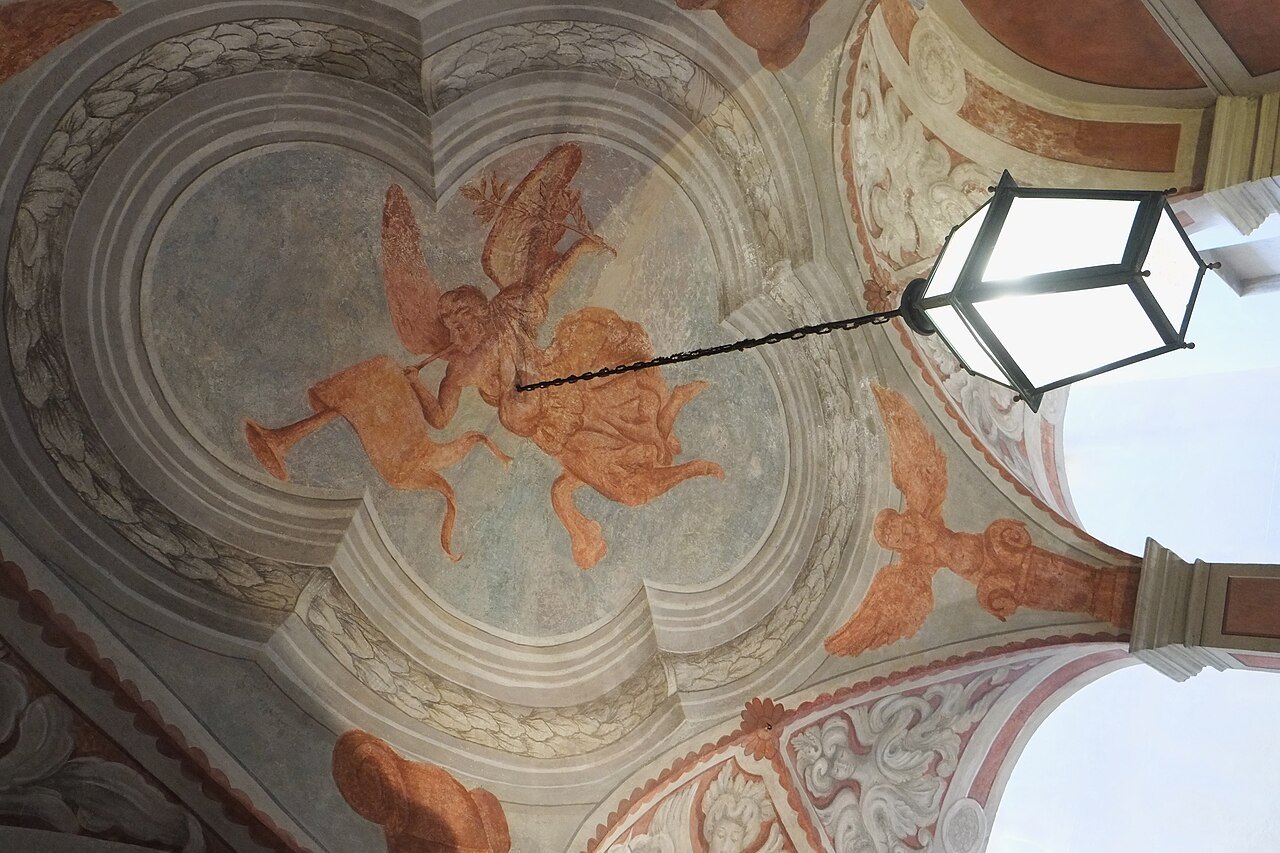
A seventeenth-century aristocratic palace buried in the lanes of Vieux Nice — from the street it is another tall ochre house, and inside it is Genoese baroque: frescoed ceilings, marble, and a monumental staircase.
It belonged to the Lascaris-Vintimille family, and the point of the interior was to be walked up by people who wanted to be seen arriving.
What is in it
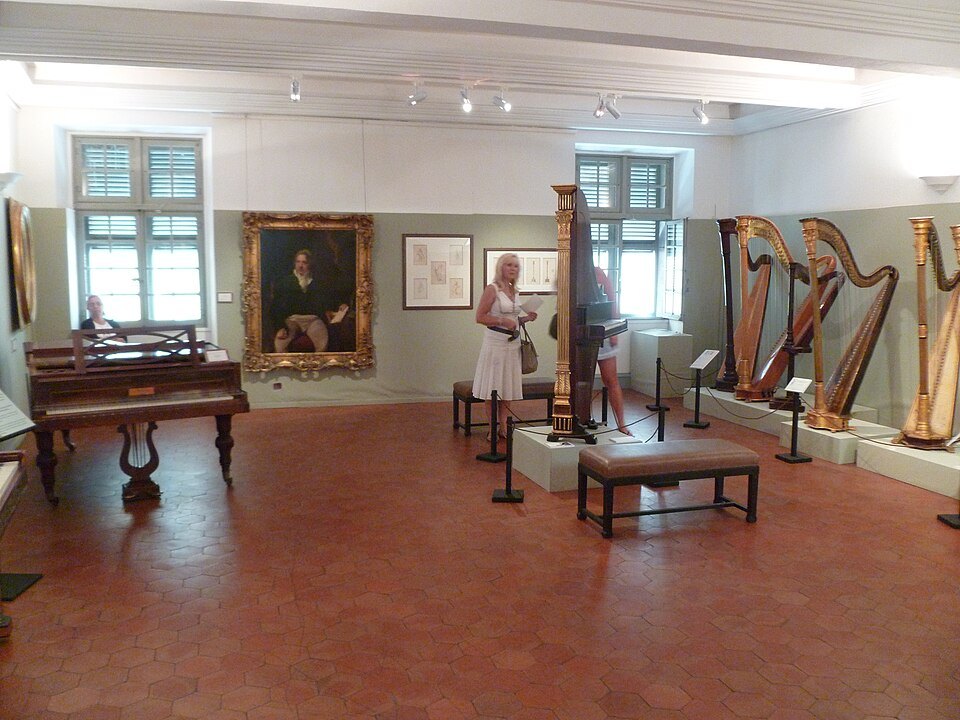
The house now holds a collection of historical musical instruments, which is a better fit than it sounds — the rooms were built for music.
Go for the ceilings and the staircase. The instruments are the reason it is open; the building is the reason to come.
The family and the house
The palace was built in the first half of the seventeenth century by the Lascaris-Vintimille family and altered in the eighteenth; nobody knows who the architects were, because the records do not survive. The family owned it until 1802. By the early twentieth century it had fallen into decay, and in 1942 the city bought it, at first to make a museum of regional folk arts. It has been a listed historic monument since February 15, 1946. Restoration work began in 1963 and was finished in 1970, when it opened to the public for good.
What to look at in the building
The style is the baroque known in Nice as Genoese. The main facade, squeezed into the old street pattern, makes the most of its windows and its balconies with white marble balustrades. Inside the entrance is a grand vestibule with groin vaults, painted in strong colors, and from it a monumental staircase, enclosed by arcaded galleries and decorated with statues, climbs to the upper floors.
The second floor is the piano nobile, the noble floor, where the reception rooms keep their original ceilings, painted in fresco in the middle of the seventeenth century; the statues and rococo ornament of the salons were added in the eighteenth. Flemish and Aubusson tapestries hang on the walls among seventeenth- and eighteenth-century furniture, and religious paintings and reliquaries recall the family's ties to the Order of Saint John of Jerusalem.
A music museum built on one man's passion
Since 2011 the palace has housed the city's collection of historical musical instruments, moved here from the Musée Masséna in 2001. With about 500 instruments, it is considered the second most important such collection in France, after the music museum of the Philharmonie de Paris.
Its core is the bequest of Antoine Gautier, born in Nice in 1825, a lawyer and amateur violinist and violist who founded a string quartet with his brother at eighteen. His house on Rue Papacino became a musical salon: Jacques Thibaud and Eugène Ysaÿe played there, and in January 1902 Gabriel Fauré came to perform some of his piano works. The Gautier Quartet celebrated its sixtieth anniversary in 1903. When Gautier died the following year, he left the city more than 225 instruments and his music library, along with money to help found a music school, on the single condition that a luthier be paid every year to keep the instruments in order.
Gautier came from a well-connected Nice family: his father was a rich timber merchant, and his mother, Félicité Rossetti, was the daughter of a prefect and granddaughter of a senator of the Rossetti family, the same family that gave its name to Place Rossetti. He studied at the Jesuit college that is now the Lycée Masséna. His will was dated May 26, 1901, and the city council accepted the bequest at a special session on September 19, 1904. The collection then moved from the fine arts museum to the Musée Masséna and the conservatory before finding its home here, and the city has kept adding to it.
Highlights of the collection
Among the finest pieces are a tenor sackbut made by Anton Schnitzer in Nuremberg in 1581; a viola da gamba by William Turner, London, 1652; violas d'amore from Bologna, Naples, Salzburg and Füssen; and extremely rare baroque guitars, including one made by Jean Christophle in Avignon in 1645, among the oldest dated French guitars. There are early harps by Sébastien Érard, including his first single- and double-action models, a set of instruments by Adolphe Sax including a quartet of saxophones, an 1884 guitar by Antonio de Torres that can still be played, and some fifty nineteenth-century instruments from outside Europe. In 2013 the Institut de France added the Tissier-Grandpierre collection of 66 instruments, including 18 old harps.
Other pieces worth finding: a bass violin by Paolo Antonio Testore, Milan, 1696; an eighteenth-century alto recorder by Johann Christoph Denner of Nuremberg; an anonymous eighteenth-century harpsichord that was once a claviorganum, half harpsichord and half organ; a harp made in Paris in 1780 by Naderman that belonged to the Viscountess of Beaumont; a Pleyel piano of 1863 that stood in the Cercle Masséna club in Nice; a rare set of clarinets; experimental string instruments; and a group of jazz instruments, including a 1950s Grafton saxophone. From 2009 the AXA group lent the Gaveau-Érard-Pleyel archives, which were shown in two exhibitions, on the invention of the modern harp in 2011 and on the living keyboard in 2012.
Sources