What it is
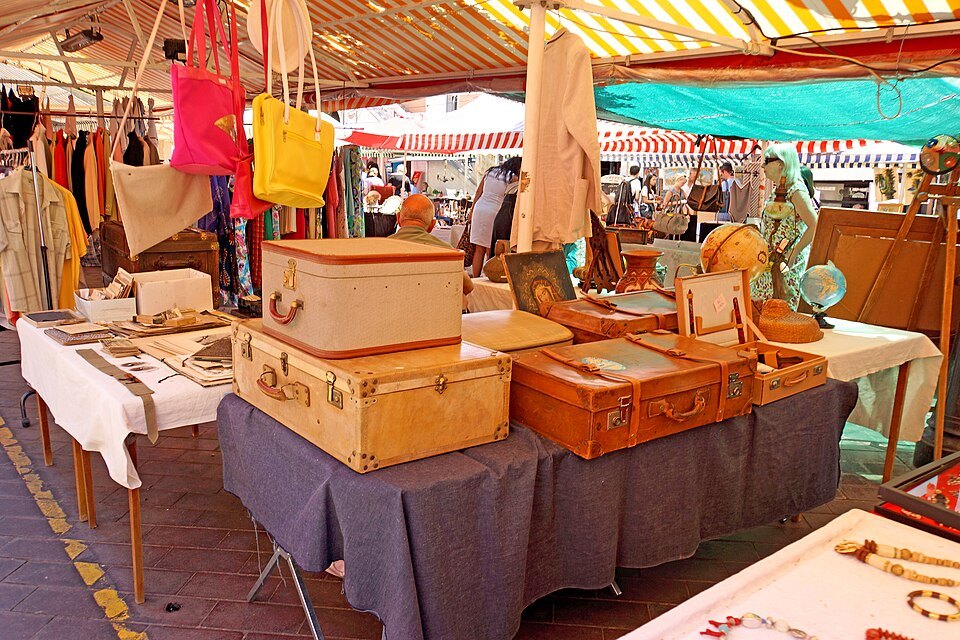
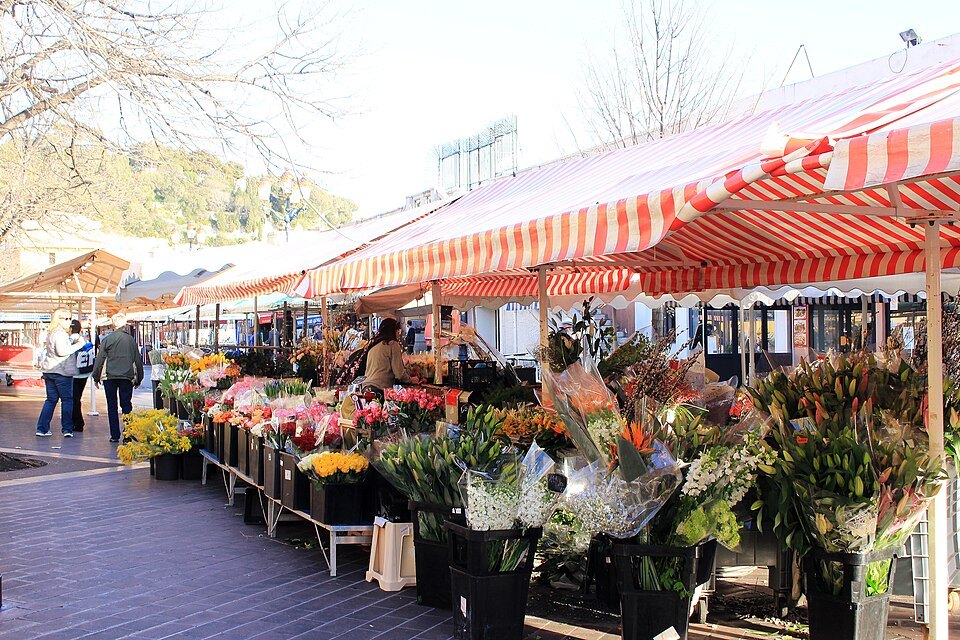
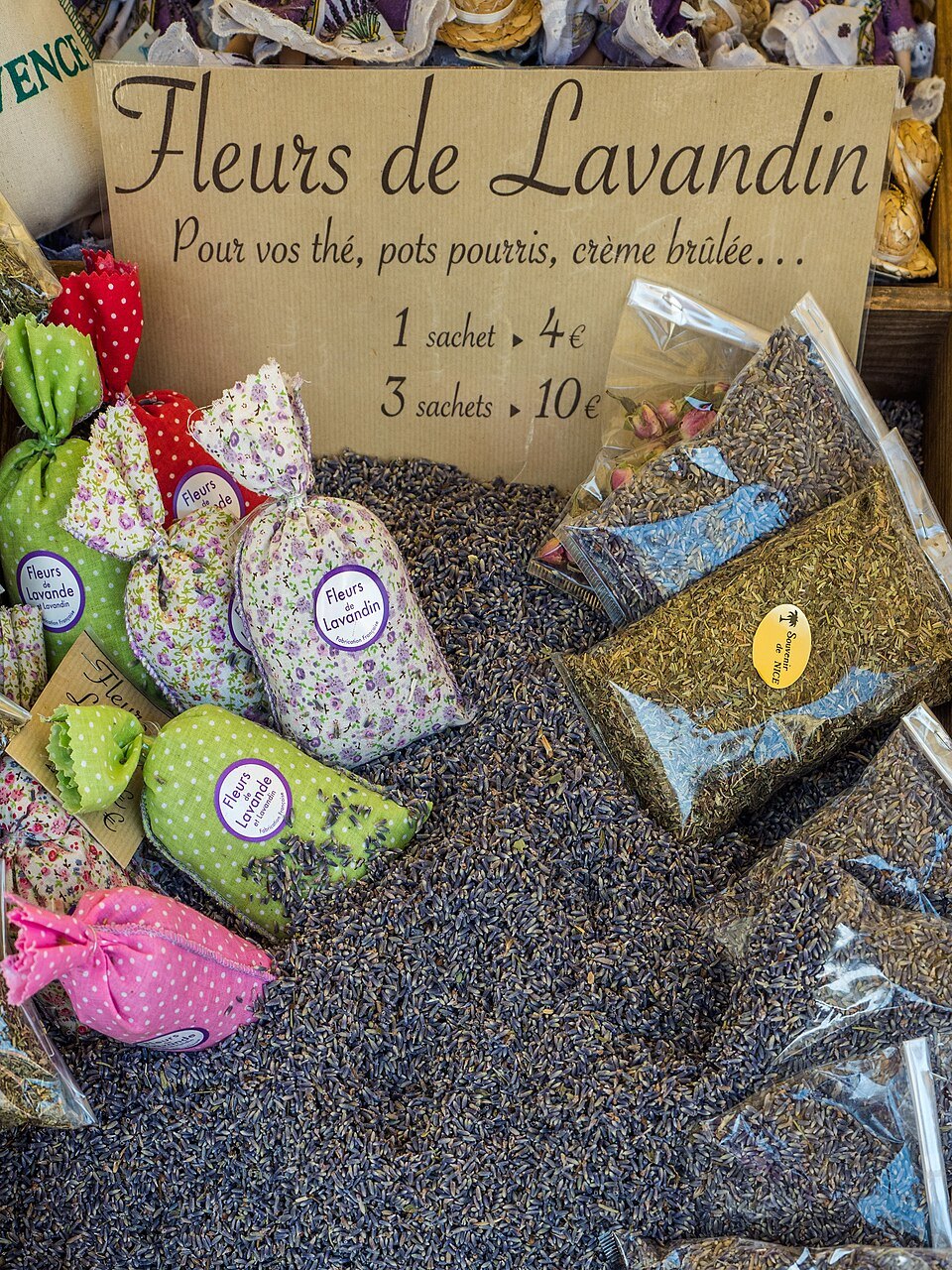
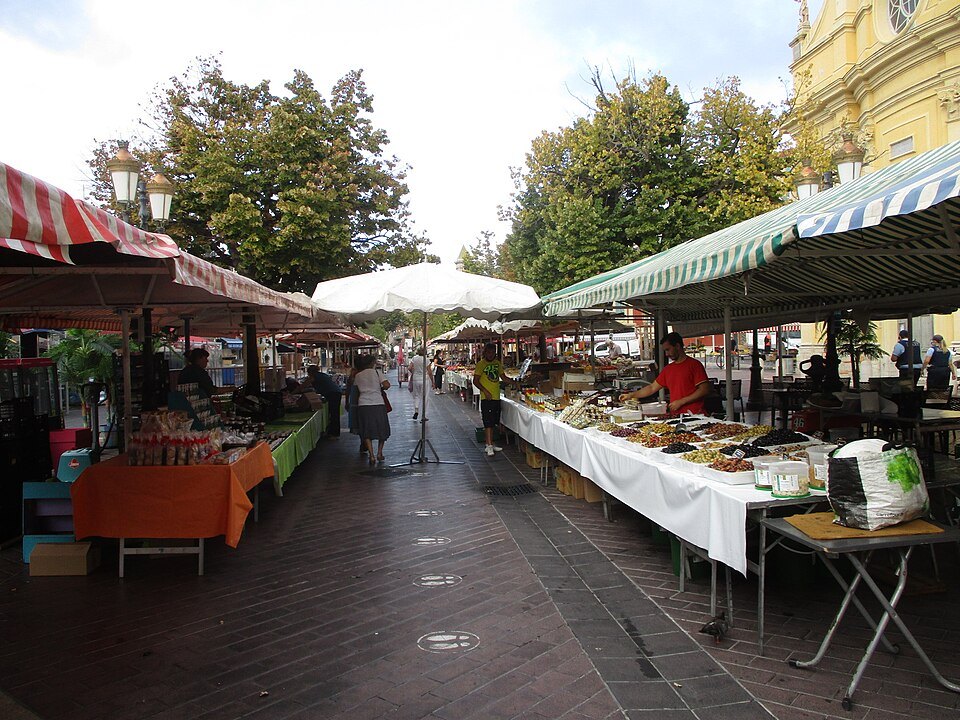
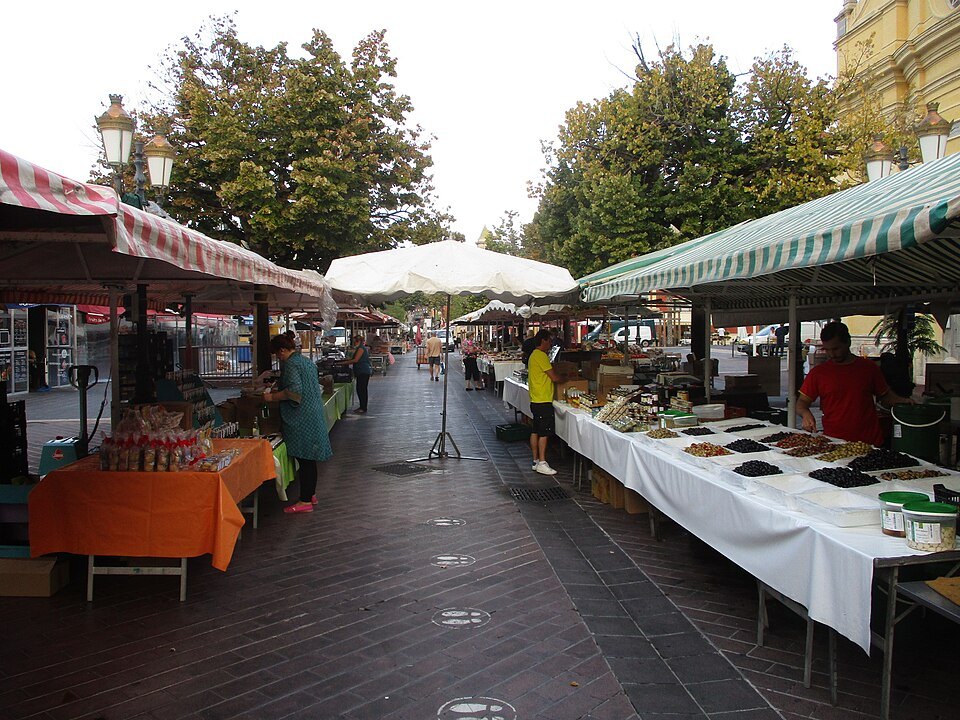
The Cours is a broad, flat street running along the southern edge of Vieux Nice, one block back from the water. For most of the week it is the marché aux fleurs — cut flowers, herbs, olives, socca, candied fruit — under awnings, with restaurant terraces down both sides.
Which market is on which day changes, and so does the season. This site does not publish opening times; the market's own notices are the only thing that is right on the day.
What to look for
The yellow house at the eastern end was Matisse's apartment for years — he painted the view from its windows repeatedly before moving up to Cimiez.
Buy socca here if it is being made in front of you. It is chickpea flour and olive oil, cooked flat on a copper pan, and it does not survive being kept warm.
The place to be seen
Old documents call this strip the Marina. From 1714 the Italian word palco, a stage, took over, and the name fit: this was where Nice came to be seen. The street probably began as open ground between a row of fortified houses and the sea wall. It took its final line in the first half of the eighteenth century, when the long terrace buildings were put up along the shore, and by 1748 it had been leveled almost from end to end.
Shops spread along it, and around 1750 the merchants and owners formed an association to defend their common interests. In 1766 rows of young elms replaced the mulberry trees planted the century before. By the end of the eighteenth century, walking here and on the terraces above was the favorite pastime of a wealthy, idle clientele: cafés and luxury shops lined the Cours, and the many foreign residents climbed to the top of the terraces for the view and the sunsets.
Salons, carnival stands and a king's monument
In 1827 a monument to King Charles-Félix was raised at the eastern end, on the square that carries his name. On the north side, houses with first-floor gardens and terraces looked down on the street. In 1839 Benoît Visconti opened a literary salon in one of them, and for more than half a century the Établissement Visconti was an address every lover of art and letters knew; its terrace was where an important guest had to be seen, with concerts, illuminated evening parties and, later, stands for the carnival parades.
How the market came, and how the cars went
On July 22, 1861, the town council approved the first market for flowers, fruit and vegetables on the Cours. It is the ancestor of the market you walk through today. The street's high-society years ended soon after: in 1892 the carnival parade moved to the new town, and the luxury shops followed it to the quay, the avenue de la Gare and Place Masséna.
In 1900 the market was covered by a metal hall, replaced in 1930 by a concrete one. In 1950 the plane trees were cut down, and outside market hours the Cours became a vast parking lot where pedestrians had no place. The terraces above, little used, were closed to the public in the 1960s.
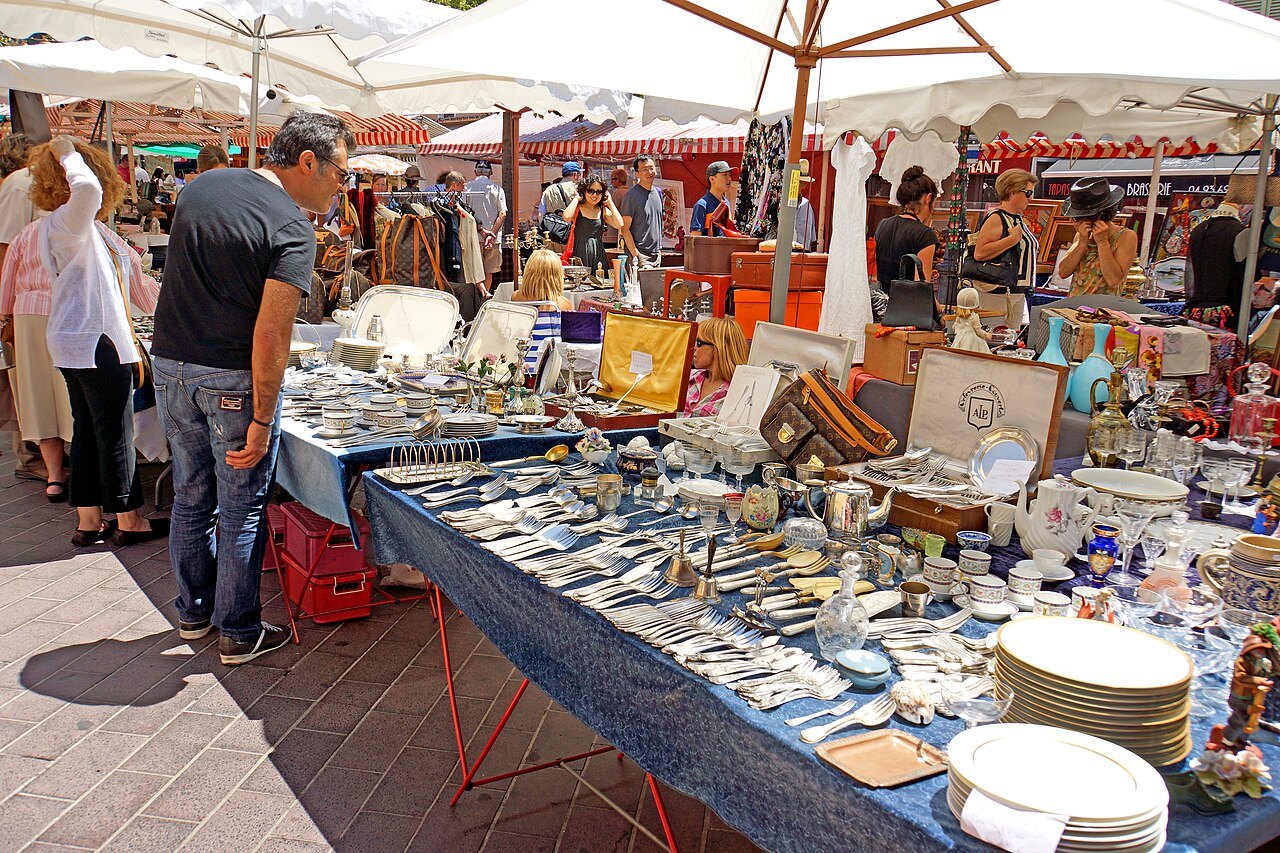
The turnaround came in 1980. The concrete hall was demolished, a parking garage was dug underneath, and the Cours was given back to people on foot. More renovation began in 2009 for the 150th anniversary of the County of Nice joining France. Depending on the time of day you will find the flower market, produce growers or, in the evening, artisans and jewelry makers.
The baroque chapel on the Cours
Halfway along the Cours stands the Chapelle de la Miséricorde, the chapel of the Black Penitents, often called the masterpiece of Nice baroque. It was built between 1747 and 1770 on the site of the King of Sardinia's old salt warehouses, for the Theatine order, by the Turin architect Bernardo Antonio Vittone, who brought the curves of Piedmontese baroque to a cramped site. Inside, a single elliptical nave is ringed by elliptical side chapels heavy with gilding and stucco, and the painted dome makes it look as if the roof opens onto the sky.
The 1980 parking garage under the Cours nearly destroyed it: cracks spread across the facades and threatened the structure. In 2002–2003 the chapel was closed for two years, braced and stabilized on micropiles, and the outside was restored from 2009. Its sacristy keeps two early paintings of the Virgin of Mercy, one by J. Mirhalet and one attributed to Louis Bréa. It has been a listed historic monument since May 30, 1921.
The palace at the west end
The big building closing off the western end, facing Place Pierre-Gautier, is the Palais Préfectoral. It began as the residence of the Dukes of Savoy: Duke Emmanuel-Philibert lodged here in 1559, and a new ducal palace was started in 1571. From the eighteenth century it was the palace of the kings of Sardinia when they came to Nice. French troops sacked it in 1792 and used it as a military hospital. After the Sardinian restoration it was rebuilt as a royal residence between 1818 and 1825, and King Charles-Félix and Queen Maria Christina were its first occupants in November 1826.
On June 14, 1860, the formal handover of the County of Nice to the government of Napoleon III took place in its salons. It has been the seat of the prefecture of the Alpes-Maritimes ever since, so you see it from the outside; the old palace of the dukes survives in name more than in stone, after the extensions of the nineteenth and twentieth centuries.
Sources
- Cours Saleya — Wikipédia (French)
- Chapelle de la Miséricorde de Nice — Wikipédia (French)
- Palais préfectoral de Nice — Wikipédia (French)