A city that faced the other way
Nice was not French for most of its history. It gave itself to the Counts of Savoy in the fourteenth century and stayed in that orbit — Savoyard, then part of the Kingdom of Sardinia — until the Treaty of Turin transferred it to France in 1860.
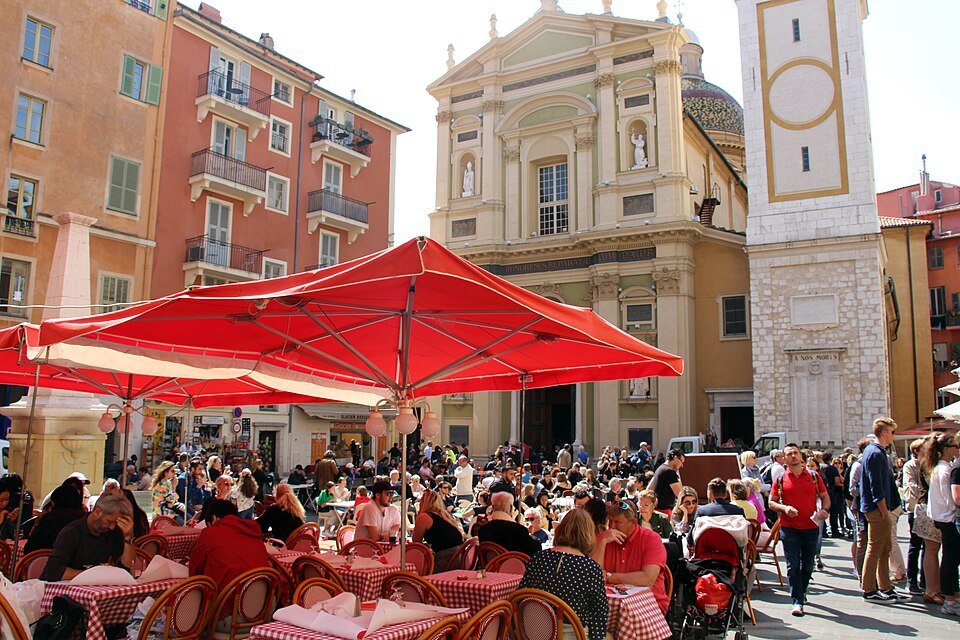
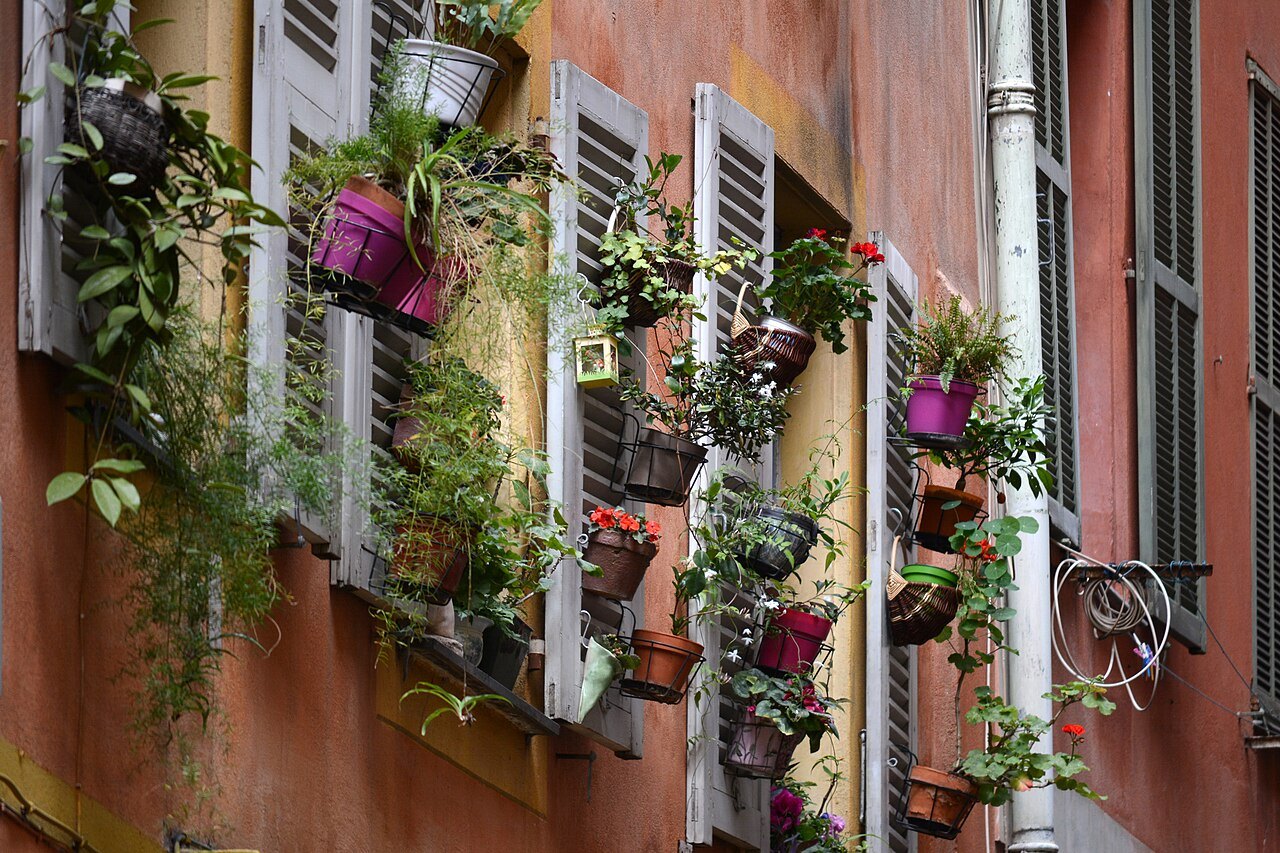
That is why the old town is built like a Ligurian port and not like a French provincial capital: tall narrow houses in ochre and oxblood, lanes cut for shade rather than for carriages, and shutters everywhere.
The churches
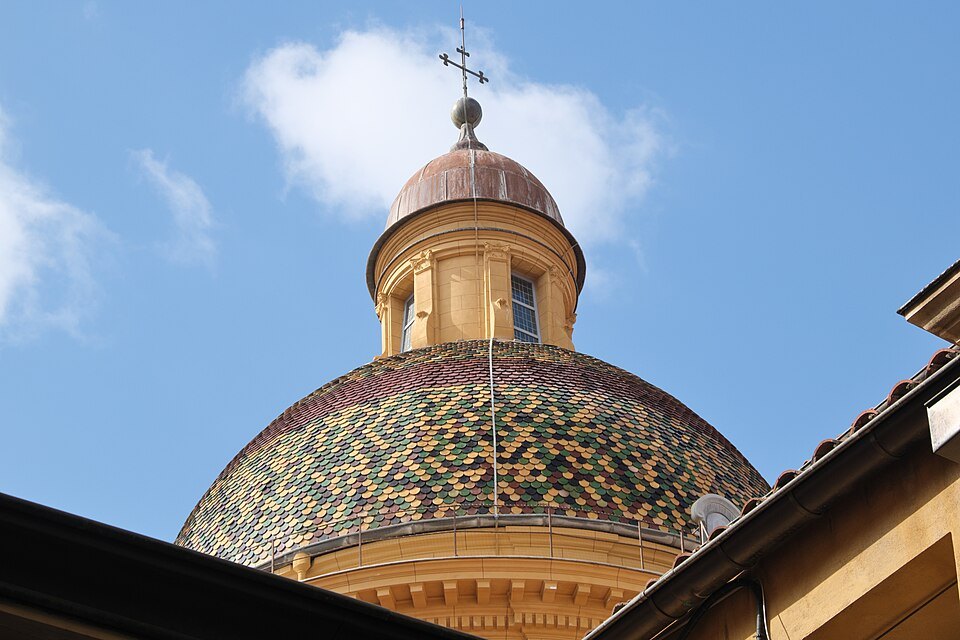
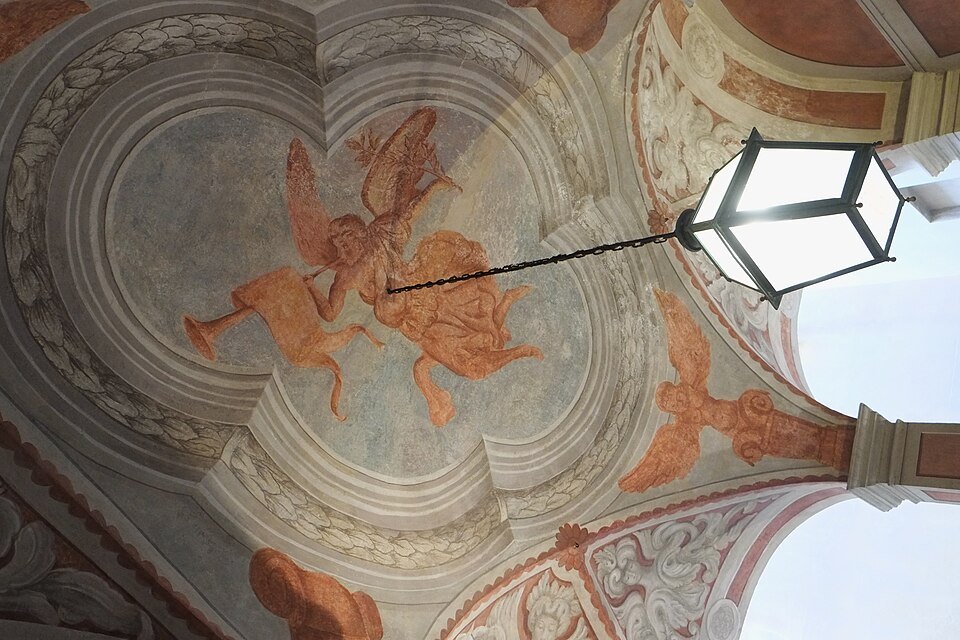
The baroque here is Italian baroque, and there is a lot of it in a small area. Sainte-Réparate is the set piece, with its glazed dome and marble interior, but almost every lane in the old town ends at a facade of the same family.
Compare it with the basilica on the main avenue — neo-Gothic, French, and built in the decades right after the cession. The two styles mark the two halves of the city's history.
The traces elsewhere
Place Garibaldi is a Turin square in everything but nationality, and it is named for a man born here in 1807 who never accepted that Nice had become French. The Palais Lascaris is a Genoese palace in a back lane.